

The source of toothache often lies not on the visible surface of the tooth, but hidden within its inner structure. Root canal treatment is an approach aimed at understanding the changes taking place in these deep layers and keeping the tooth in the mouth. Although many people associate this procedure with uncertainty and anxiety, it's now regarded as a planned, controlled process focused on preserving the tooth's biological balance.
What Is Root Canal Treatment and How Is It Related to the Tooth's Inner Structure?
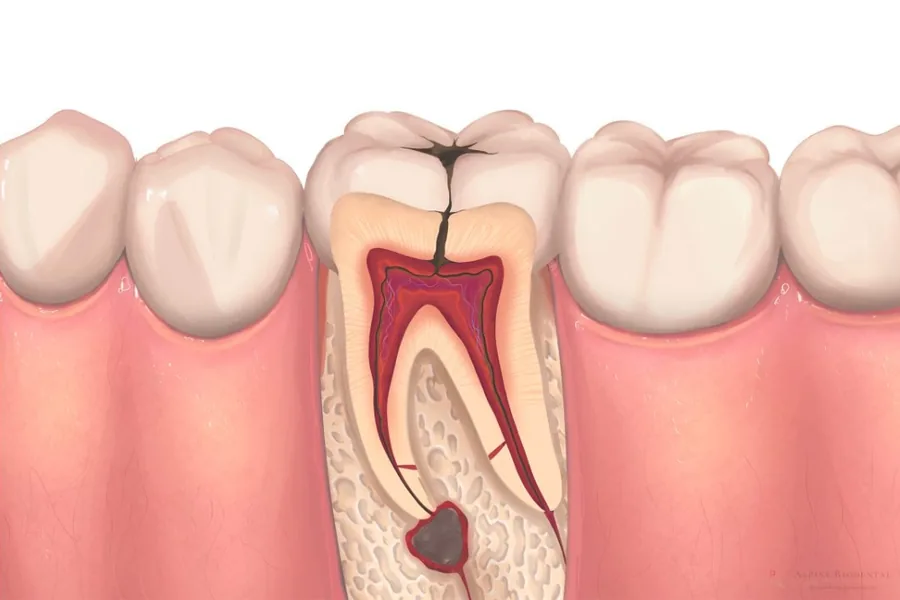
Root canal treatment becomes necessary when the pulp tissue at the very core of the tooth is affected. The pulp is made up of nerve fibres, connective tissue and blood vessels. This structure is what keeps the tooth alive and maintains its biological communication with the surrounding tissue. However, a range of factors can disrupt the pulp's healthy structure.
The spaces that house the pulp tissue are called the root canals — which is exactly where root canal treatment gets its name. The aim of the procedure is to clear these canals of biological debris and preserve the tooth's functional integrity. In this respect, root canal treatment is regarded as an alternative to extraction.
In the scientific literature, root canal treatment falls under the heading of endodontic treatment. Endodontics is the specialist field concerned with the tooth's internal anatomy. What's important here is that no two applications of root canal treatment take place on the same biological ground. Variables such as the number of roots, the morphology of the canals and the surrounding bone tissue all directly affect the process.
When Does Root Canal Treatment Become Necessary?
The need for root canal treatment isn't tied to a single cause. Tooth tissue can become affected right down to the pulp, either gradually over time or as the result of a sudden event. At this point, root canal treatment aims to restore the tooth's biological balance.
Deep decay is among the most commonly associated causes. But it isn't only decay — traumatic impacts, repeated restorations and microscopic cracks can also give rise to the need for root canal treatment. What matters here is that a clear sign isn't always visible when looking at the outer surface of the tooth.
The table below summarises the common situations linked to root canal treatment:
|
Situation |
Effect on the Pulp |
|
Deep decay |
Bacterial spread |
|
Trauma |
Disrupted blood supply |
|
Repeated fillings |
Heat and pressure stress |
|
Cracked teeth |
Micro-leakage |
This table shows that the decision to proceed with root canal treatment isn't based on a single finding. Clinical assessment, imaging techniques and the tooth's biological response are all considered together.
How Is Root Canal Treatment Planned?
Contrary to what many people think, the root canal treatment process isn't made up of a single stage. The planning stage is just as important as the treatment itself. During this stage, the tooth's anatomy, number of roots and canal lengths are assessed. In the Doctor Afra approach, this process is supported by digital imaging and measurement systems.
During planning, a roadmap for the root canal treatment is drawn up. Some teeth have a single root and a single canal, while others have complex structures with three or four canals. This means every experience of root canal treatment can differ from person to person.
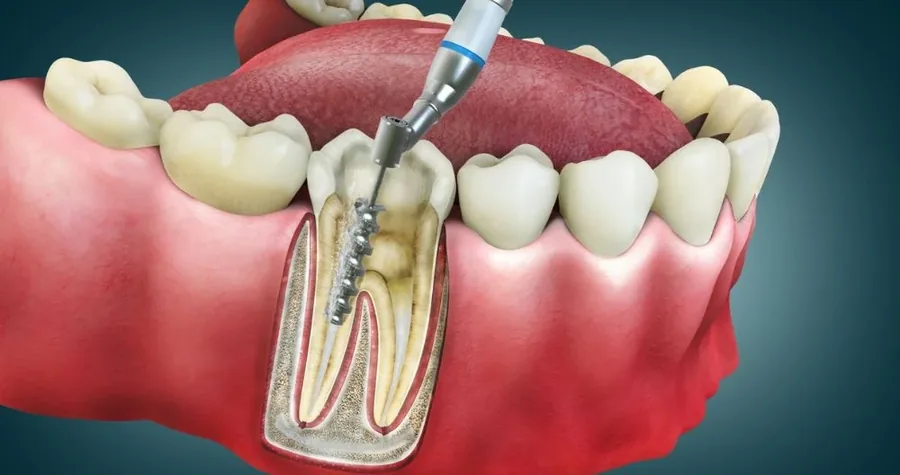
Another important aspect of the planning process is the tooth's relationship with the surrounding tissue. The bone tissue at the root tip, the periodontal structure and the neighbouring teeth are all assessed. All of this information shapes the technical approach taken during root canal treatment.
How Long Does Root Canal Treatment Take?
Giving a precise timeframe for root canal treatment isn't always scientifically possible. The main reason for this is that every tooth has a different anatomical structure. There can be significant differences in duration between a tooth with a single canal and a molar with multiple canals.
As a general guide, root canal treatment can be completed in a single session or may require several. Factors that affect the number of sessions include the number of canals, the curvature of the canals and the condition of the internal structure. For this reason, root canal treatment can't be squeezed into a fixed timetable.
The points below summarise the key variables that affect the duration of root canal treatment:
- The number of roots and canals in the tooth
- The complexity of the canal anatomy
- Whether the tooth has been treated before
- The imaging and measurement techniques used
These variables mean the duration of root canal treatment is a personal experience, which explains why the process doesn't unfold in the same way for every patient.
Where Does the Perception That Root Canal Treatment Is Painful Come From?
When people hear the words root canal treatment, one of the most common assumptions is that it will be painful. This perception has its roots in techniques used in the past, from periods when technology was more limited. Modern approaches to root canal treatment, however, show that this belief is, to a large extent, a historical legacy.
The idea of pain is often linked not to the treatment itself, but to the biological stress caused by the condition that makes treatment necessary in the first place. The pulp being affected can already cause sensitivity and discomfort in the tooth. Root canal treatment is a process aimed at relieving this biological burden.
Scientific studies emphasise that the sensations felt during root canal treatment are closely linked to personal perception, stress levels and expectations. This means the experience of root canal treatment is shaped not only by technical factors but by psychological ones too.
How Does the Tooth's Structure Change After Root Canal Treatment?
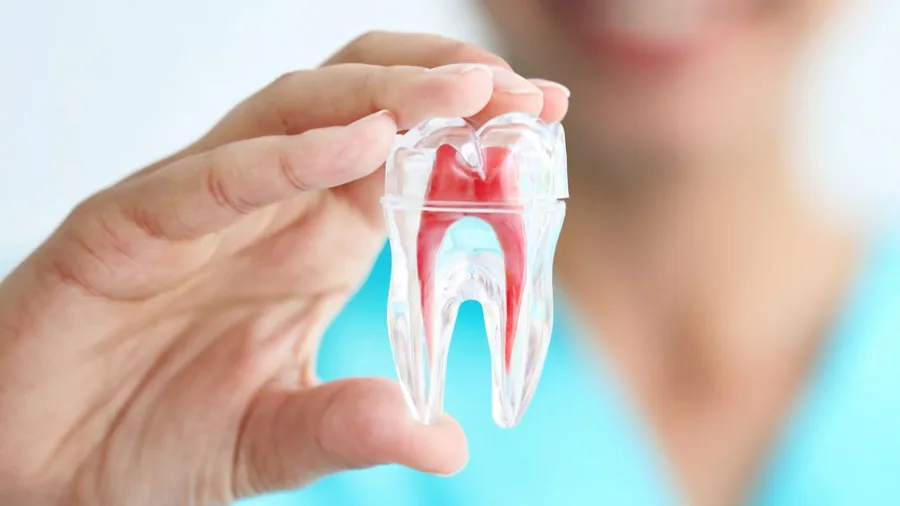
After root canal treatment, the tooth's internal biology changes, but this doesn't mean the tooth loses its function. Once the pulp tissue has been removed, the tooth loses its sensory communication with the surrounding tissue. Even so, it continues to serve its chewing function and its role within the mouth.
At this point, a tooth that has undergone root canal treatment continues its existence on a different biological plane. In the literature, this is described as the tooth remaining mechanically functional. In other words, rather than rendering the tooth inactive, root canal treatment brings it into a controlled state of balance.
In the Doctor Afra approach, planning the tooth's restoration after root canal treatment is also treated as part of the process. This helps to preserve the tooth's structural integrity over the long term.
Alternative Terms Used for Root Canal Treatment and What They Mean
Although root canal treatment is generally known by a single name in everyday use, it's referred to by different terms in academic and clinical settings. These terms often describe the same process, but the emphasis shifts depending on the perspective. This is why understanding the background of the language used when encountering root canal treatment makes the process easier to follow.
The most common synonym is endodontic treatment. Endodontics is the branch of science that studies the tooth's internal tissue, and root canal treatment is one of its core applications. Beyond this, the term "root canal therapy" is also frequently used, emphasising that the procedure focuses directly on the canal system.
This variety of terminology shows that root canal treatment isn't simply a mechanical procedure — it's also approached on a biological and microscopic level. In this article, prepared by Doctor Afra, these different terms have been brought together under a single, consistent framework.
What Difference Do the Technologies Used During Root Canal Treatment Make?
One of the main reasons root canal treatment is now seen as a more predictable process is technological advancement. Imaging systems, measurement devices and rotary instruments make it possible to analyse the internal anatomy of the canals far more clearly.
Digital imaging, in particular, plays an important role in planning root canal treatment. It allows root length, canal curvature and the condition of the surrounding tissue to be assessed far more clearly, which increases how controllable the procedure is.
Another effect of technology has been the advancement of the materials used during root canal treatment. The biocompatible materials used to fill the canal offer a structure that's more in harmony with the tooth's internal environment. In this way, root canal treatment takes into account not just the present moment, but long-term structural balance too.
How Is a Tooth That Has Had Root Canal Treatment Perceived in Everyday Life?
A tooth that has had root canal treatment usually can't be told apart from other teeth in everyday life. It continues to serve its functional role in chewing, speech and overall aesthetics. However, the changes that take place within the tooth's internal structure place it in a biologically different category.
This difference relates to the way the tooth now responds to external stimuli. After root canal treatment, the tooth no longer perceives stimuli such as heat or cold in the same way it once did. Most people never notice this, but it's a scientifically significant detail.
Common Misconceptions About Root Canal Treatment
Misconceptions about root canal treatment often stem from hearsay rather than fact. These beliefs are less a product of the procedure itself and more a result of past experiences and exaggerated accounts. Modern dentistry, however, approaches root canal treatment within a far more systematic and controlled framework.
One of the most common misconceptions is the belief that root canal treatment renders the tooth completely non-functional. In reality, the tooth continues to serve its chewing function after the procedure. Another common belief is that root canal treatment is always a long and difficult process — an assumption that stems from treating every tooth as though it has the same biological structure.
These perceptions are based more on personal experience than on the scientific reality of root canal treatment. This is why taking a holistic view of the subject helps move beyond individual anecdotes.
Why Is Root Canal Treatment Still a Developing Field, Scientifically Speaking?
Root canal treatment is one of the most heavily researched areas in dentistry. The main reason for this is that canal anatomy varies from person to person. These microscopic variations keep the field in a constant state of research and development.
In scientific publications, root canal treatment is treated as a process of biomechanical and biological balance. Canal shaping techniques, irrigation methods and filling materials each represent a different aspect of this balance. Every new piece of research helps to define the boundaries of root canal treatment a little more clearly.
From Doctor Afra's perspective, root canal treatment is seen not merely as the application of existing knowledge, but also as the interpretation of current scientific data. This approach explains why this content carries a certain academic depth.
A General Assessment of Root Canal Treatment
Root canal treatment is a multi-layered approach aimed at preserving the tooth's biological integrity. Throughout this article, we've tried to explain not just how root canal treatment is carried out, but why it's approached in this way. When duration, perception, technology and scientific background are considered together as a whole, the subject becomes far easier to understand.
Book an appointment for your smile
Get in touch with us for your questions and treatment options.