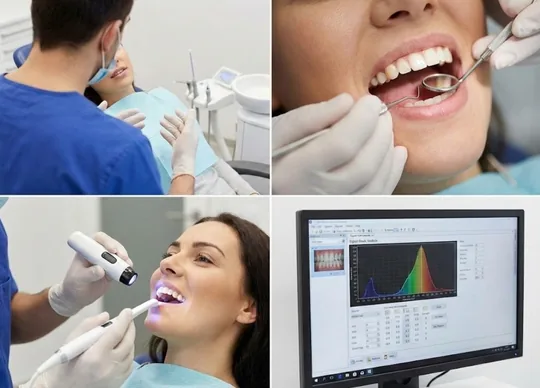
Teeth whitening is an aesthetic dental procedure that uses chemical agents to lighten discolouration that develops in the enamel and dentine over time. Available today both in the clinic and through at-home systems, this procedure aims to improve smile aesthetics.
A Brighter Appearance
Provides a balanced, natural lightening of tooth colour.
Enamel-Friendly Approach
Controlled application methods are used that protect tooth structure.
Personalised Planning
The whitening method is determined according to individual needs.
Fast Results
Offers controlled, effective application under clinical conditions.
What Is Teeth Whitening? Its Scientific Basis and Methods
Teeth whitening is an aesthetic dental procedure that uses chemical agents to lighten discolouration that develops in the enamel and dentine over time. Available today both in the clinic and through at-home systems, this procedure aims to improve smile aesthetics.
Darkening of tooth colour can be caused by many factors, including ageing, dietary habits, smoking, certain medications, and trauma. Teeth whitening treatments are planned according to the degree and cause of this discolouration. Modern systems generally use agents containing hydrogen peroxide or carbamide peroxide.
What Is Teeth Whitening?
Teeth whitening is a different procedure from cleaning surface stains. While professional cleaning removes surface plaque and tartar, whitening acts on discolouration within the tooth structure itself.
Owing to the semi-permeable structure of the enamel, whitening agents pass through it and reach the dentine layer. The pigment molecules found there, known as chromogens, are broken down through a chemical reaction. As a result of this process, the tooth colour can lighten by several shades.
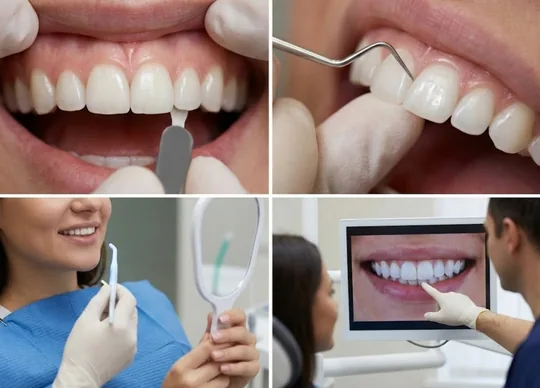
Because everyone's tooth structure is different, whitening results can vary from person to person. For this reason, a detailed assessment before the procedure is important.
In Which Conditions Is Teeth Whitening Used?
Teeth whitening is not a direct treatment for any disease; it is an aesthetic procedure. However, in some cases it may be chosen as part of a broader treatment plan.
For example, internal whitening may be applied to teeth that have darkened following root canal treatment. Whitening options may also be considered for enamel discolouration such as fluorosis, or for teeth darkened due to trauma.
In some cases, such as discolouration caused by tetracycline use, results may be limited. For this reason, the source of the discolouration must be correctly assessed.
How Is Teeth Whitening Performed?
Teeth whitening is generally performed using two main methods: in-office and at-home systems.
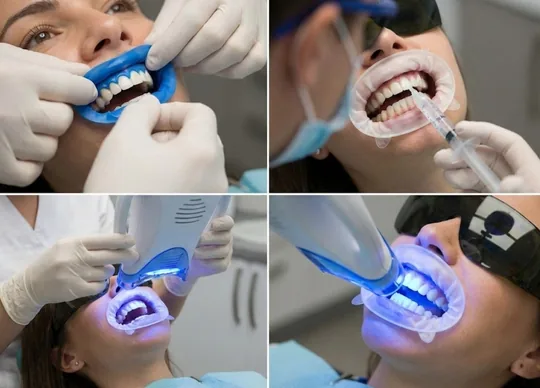
In in-office application, the gums are protected with special barriers. The whitening gel is then applied to the tooth surface. Some systems use light- or laser-assisted activation. The procedure usually takes 30 to 60 minutes.
In the at-home system, a lower-concentration whitening gel is placed into custom-made trays. The patient wears these trays for a specified period. Results are generally observed within a few weeks.
| Method | Application | Time to Results | Key Feature |
|---|---|---|---|
| In-Office Whitening | Applied in the clinic under professional supervision | In a single session | Fast, powerful effect |
| At-Home Whitening | Applied at home using custom-made trays | 1 to 3 weeks | Gradual, controlled lightening |
Which Type of Teeth Whitening Method Is More Suitable?
The choice of teeth whitening method depends on factors such as the degree of discolouration, the patient's expectations, and tooth sensitivity.
In-office applications produce faster results, while at-home systems provide controlled, gradual lightening. In some cases, both methods can be combined.
Lower-concentration systems may be preferred for individuals prone to excessive sensitivity. For this reason, personalised planning is important.
Are There Any Risks Associated with Teeth Whitening?
Teeth whitening is considered safe when applied correctly. However, temporary tooth sensitivity may occur, which usually subsides within a few days.
There is no strong scientific evidence that it causes permanent damage to enamel. However, uncontrolled and uninformed application can lead to gum irritation.
How Long Does It Take for Teeth to Whiten?
The lightening of tooth colour after whitening is usually noticeable immediately after the procedure. In in-office applications, a lightening of several shades can be seen after a single session.
With at-home application, results appear more gradually. Depending on tooth structure, a noticeable change can occur within 1 to 3 weeks.
Is the Effect of Teeth Whitening Permanent?
Teeth whitening is not a permanent procedure. Over time, discolouration can recur as a result of consuming pigmented foods and beverages.
The effect is generally reported to last for 1 to 2 years, although this period varies depending on individual habits.
What Should Be Considered After the Procedure?
It is recommended to avoid pigmented foods for the first 48 hours after teeth whitening. Coffee, tea, red wine, and cigarettes can cause discolouration.
Maintaining good oral hygiene and attending regular check-ups can help preserve the whiteness achieved.
What Causes Differences in Tooth Colour?
The need for teeth whitening generally arises from differences in tooth colour. Factors that affect tooth colour include:
- Genetic makeup
- Ageing
- Smoking
- Coffee and tea consumption
- Trauma
- Certain medications
As the enamel thins, the dentine beneath becomes more visible, which can make the teeth appear darker.
What Should Be Considered with At-Home Teeth Whitening?
With at-home whitening systems, the duration and dosage recommended by the dentist should not be exceeded. Overuse can increase sensitivity.
It is important to use custom-made trays. Ready-made, over-the-counter products can harm the gums.
Is There an Age Limit for Teeth Whitening?
Teeth whitening is generally recommended after the age of 18, since it is important for tooth development to be complete.
In younger individuals, the enamel structure may be more permeable. For this reason, assessment should be carried out on an individual basis.
Are There Situations in Which Teeth Whitening Should Not Be Performed?
Teeth whitening is generally postponed in cases of active decay, gum disease, or pregnancy.
Alternative aesthetic methods may also be considered for individuals with enamel defects or advanced sensitivity.
What Are the Risks of Whitening Teeth Using Natural or Unnatural Alternative Methods?
Using baking soda, lemon juice, or other abrasive substances for teeth whitening can lead to enamel loss. Although these methods may make the tooth surface appear brighter temporarily, they can cause wear over the long term.
Uncontrolled chemical products can also cause gum burns and sensitivity. For this reason, it is important that the procedure is carried out under professional supervision.
Teeth whitening is one of the most frequently performed procedures in aesthetic dentistry. Satisfying results can be achieved when the source of discolouration is correctly assessed and the appropriate method is selected.
Every individual's tooth structure is different. For this reason, personal assessment and an informed application process are important. Planning based on scientific principles provides a balanced approach to both aesthetics and dental health.
Frequently Asked Questions
Teeth whitening is an aesthetic treatment applied to remove stains and colour differences from the teeth. Using special gel or laser-assisted systems, the tooth colour is lightened without damaging the enamel, resulting in a brighter smile.
It is suitable for adults with healthy teeth and gums who are unhappy with their tooth colour and wish to remove stains. If there are issues such as decay, gum disease, or excessive sensitivity, these problems must be resolved first.
In-office procedures usually take 60–90 minutes and can be completed over several sessions. At-home whitening kits, on the other hand, require regular use over several weeks; results appear more slowly but tend to last longer.
Some people may experience temporary tooth sensitivity during or after the procedure. This is usually short-lived and can be relieved with desensitising toothpastes or gels.
It is recommended to avoid staining foods and drinks such as tea, coffee, and red wine for the first 24–48 hours after whitening. Regular brushing, flossing, and routine dental check-ups can help make the whitening effect last longer.