The All-on-6 Implant is an advanced treatment protocol aimed at providing a fixed restoration on six implants placed in a single jaw, for individuals who are completely edentulous or have suffered advanced tooth loss. It is preferred in particular for patients subject to high chewing forces, in order to create more support points.
Enhanced Stability
Structural balance and retention are reinforced with the support of six implants.
Balanced Force Distribution
Chewing loads are distributed more evenly across the bone.
Long-Term Reliability
With proper planning, it follows a predictable course over the long term.
Personalised Planning
Treatment is tailored to the individual's anatomical and functional needs.
What Is the All-on-6 Implant? Fixed Dental Treatment with Six Implants
The All-on-6 Implant is an advanced treatment protocol aimed at providing a fixed restoration on six implants placed in a single jaw, for individuals who are completely edentulous or have suffered advanced tooth loss. It is preferred in particular for patients subject to high chewing forces, in order to create more support points.
By increasing the number of implants, the All-on-6 Implant system aims to optimise biomechanical load distribution. This approach has the potential to increase long-term stability, particularly in patients with good bone quality. It holds an important place among full-arch fixed rehabilitation options in the modern implantology literature.
What Is the All-on-6 Implant?
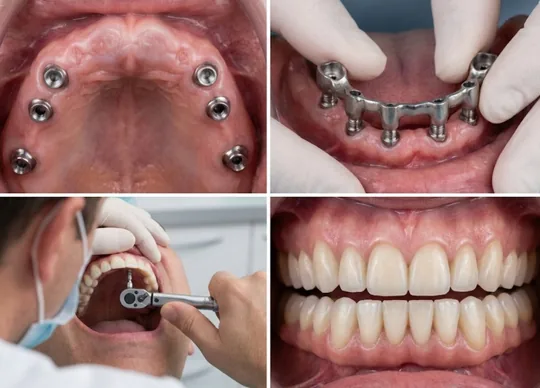
The All-on-6 Implant is a treatment model in which six dental implants are placed in a single jaw to restore all the teeth with a fixed bridge restoration. Each implant supports a specific section of the restoration and helps distribute chewing forces evenly.
Six support points provide stronger load-bearing capacity, particularly in the back regions. This can be an advantage for individuals with a wide jaw structure or high chewing pressure.
Clinical studies indicate that, in some cases, an increased number of implants contributes to restoration stability. However, suitability must always be assessed on an individual basis.
Differences Between All-on-6 and All-on-4
The main difference between the All-on-6 Implant and the All-on-4 system is the number of implants used. In the All-on-4 method, four implants are considered sufficient, whereas the All-on-6 approach increases support with two additional implants.
- Number of implants: 4 implants in the All-on-4 system, 6 implants in the All-on-6 system.
- Support area: A larger support surface in the All-on-6 system.
- Load distribution: Stronger, more widespread distribution in the All-on-6 approach.
- Preferred cases: All-on-4 for patients with limited bone volume, All-on-6 for patients with adequate bone volume.
How Is the All-on-6 Implant Performed?
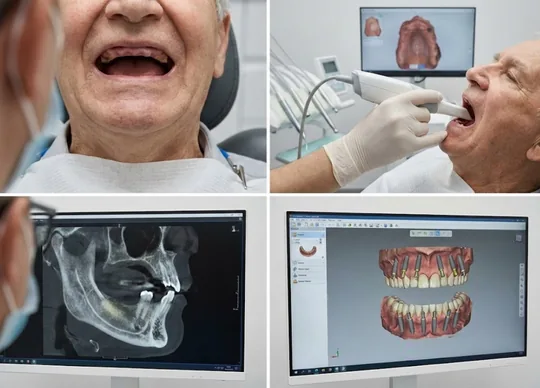
All-on-6 Implant treatment begins with a detailed planning process. The jawbone is analysed using three-dimensional tomography images. Bone density, nerve canals and anatomical structures are assessed.
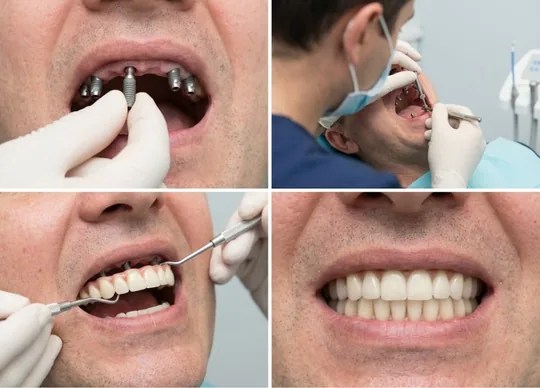
During the surgical stage, six implants are placed at strategic points. A balanced distribution across the front and back regions is the goal. This distribution is important for the long-term durability of the restoration.
In some cases, a temporary fixed restoration can be fitted on the same day. However, for the permanent restoration, the fusion process between the bone and the implant must first be completed.
Advantages of the All-on-6 Implant
The All-on-6 Implant system stands out in particular for its stability and durability. The large support area provided by the six implants allows chewing forces to be transmitted more evenly.
This system can be more advantageous biomechanically for individuals with a wide jaw structure. It may also help reduce the risk of restoration fracture.
All-on-6 Implant Prices and Cost Factors
The cost of the All-on-6 Implant depends on many factors. The implant brand used, the scope of the surgical procedure and the restoration material can all affect the price.
- Implant brand and technology
- Additional surgical requirements
- Digital planning systems
- Clinical infrastructure and level of expertise
Care and Considerations After All-on-6
Oral hygiene is of great importance after the All-on-6 Implant procedure. The underside of the fixed restoration needs to be cleaned with special interdental brushes.
Regular clinical check-ups help maintain the health of the tissues around the implant. Good care habits are decisive for long-term stability.
Who Benefits Most from the All-on-6 Implant?
The All-on-6 Implant can offer an advantage particularly for individuals with a wide jaw structure, adequate bone density and strong chewing forces.
For individuals with a habit of night-time teeth clenching, the additional support points can also provide extra stability. However, the final decision is determined through clinical assessment.
What Is the All-on-4 Implant? How Is the Four-Implant Technique Performed?
The All-on-4 system is a treatment model aimed at providing a fixed restoration on four implants. It is frequently preferred for patients with limited bone volume.
Compared with the All-on-6 Implant, fewer implants are used. This creates a difference in surgical planning.
What Is a Dental Abscess and What Causes It? What Are the Symptoms of a Dental Abscess and How Does It Resolve?
A dental abscess is an inflammatory condition that develops as a result of an infection in the tooth root or the surrounding tissues. It usually presents with severe pain and swelling.
If not treated early, it can spread to the surrounding tissues. For this reason, it is important to seek a dentist's assessment as soon as symptoms are noticed.
Frequently Asked Questions
The All-on-6 implant is a method of fitting a fixed restoration onto six implants placed in the jawbone in cases of complete tooth loss. Compared with the four-implant system, it provides more support and improves long-term stability and chewing function.
It is suitable for adults who are completely edentulous or at high risk of losing their teeth. It is preferred in particular for patients with adequate jawbone; the need for a bone graft is largely reduced, and it offers a safer procedure.
The procedure is carried out under local anaesthetic or sedation, so no pain is felt during treatment. Mild swelling and sensitivity may occur afterwards, but this returns to normal within a few days.
With proper oral care and regular check-ups, All-on-6 implants can be used for many years. The integration of the implants with the bone and regular maintenance of the restoration are critical to the success of the treatment.
Soft, lukewarm foods should be preferred in the first few days after the procedure. Avoiding hard or sticky foods, brushing regularly and using special cleaning tools extend the life of the implant. Routine six-monthly check-ups should not be missed.