Porcelain veneers are a fixed prosthetic treatment applied to restore teeth that have suffered aesthetic and functional damage. In cases of decay, fracture, wear, discolouration or misshapen teeth, a custom-made porcelain material is bonded onto the tooth to achieve both a natural appearance and a strong structure.
Natural Aesthetics
Porcelain material offers optical properties closely resembling natural tooth structure.
Functional Harmony
Planned with careful attention to chewing forces and bite balance.
Colour Control
Shade and shape are selected to harmonise with facial features.
Clinical Reliability
A treatment option that has delivered predictable results for many years.
What Are Porcelain Veneers? How Are Porcelain Veneers Applied?
Porcelain veneers are a fixed prosthetic treatment applied to restore teeth that have suffered aesthetic and functional damage. In cases of decay, fracture, wear, discolouration or misshapen teeth, a custom-made porcelain material is bonded onto the tooth to achieve both a natural appearance and a strong structure.
Today, porcelain veneers are frequently preferred both in aesthetic dentistry and in functional rehabilitation procedures. Thanks to their close resemblance to natural tooth colour and their light transmission, they deliver highly natural results.
What Is a Porcelain Tooth?
A porcelain tooth is an aesthetic restoration prepared in a laboratory using precise impressions and then bonded onto the tooth. It can be produced with a substructure or as a fully ceramic restoration. The aim is to preserve the existing tooth while placing a durable, aesthetic covering over it.
Porcelain material has light-reflecting properties similar to natural tooth enamel. For this reason, it is frequently preferred especially for front tooth aesthetics. It can be applied both in single-tooth restorations and in cases where multiple teeth need to be covered.
Why Is Porcelain Veneer Treatment Performed?
Porcelain veneer treatment can be applied for many different reasons. In teeth that have lost significant structure due to advanced decay, a filling alone may not be sufficient. In such cases, the tooth needs to be fully covered and protected.
Teeth that have undergone root canal treatment can become brittle over time. Porcelain veneers increase the strength of these teeth. At the same time, aesthetic problems such as shape irregularities, gaps between teeth, discolouration and enamel defects can also be corrected with veneers.
Porcelain veneers may also be preferred for individuals with teeth clenching or wear problems, in order to restore the original tooth form.
- Advanced decay and tooth structure loss
- Brittleness following root canal treatment
- Discolouration and aesthetic irregularities
- Loss of tooth form and wear
What Are the Advantages of Porcelain Veneers?
Achieving a natural aesthetic appearance Porcelain veneers closely match natural tooth colour and light transmission. As a result, they do not create an artificial appearance. They are an ideal solution especially for individuals with high aesthetic expectations in the front tooth region.
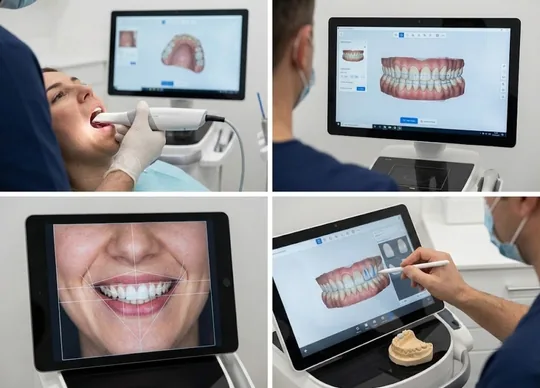
The shape, length and colour of the teeth can be planned according to the patient's expectations. As part of smile design, symmetry and facial harmony can be achieved.
Being a durable design Porcelain material is resistant to chewing forces. When applied with proper planning and the correct technique, it can be used trouble-free for many years.
Thanks to its structure that withstands chewing pressure, it is a functionally safe solution, particularly in the back tooth region.
High biological compatibility with the body Porcelain is a biocompatible material. It is highly compatible with gum tissue and carries a low risk of allergic reaction. It does not cause any discolouration of the gum tissue.
Well-fitted veneers are of great importance for the protection of gum health. When properly made, the risk of gum recession is minimal.
High resistance to staining Porcelain surfaces are smooth and have a low tendency to absorb colour. They can be more resistant than natural tooth enamel to external factors such as tea, coffee and smoking.
This property helps preserve the aesthetic appearance over a long period.
Long-term use When proper oral care is maintained, porcelain veneers can be used for many years. Regular dental check-ups allow potential problems to be detected at an early stage.
Thanks to their durability and aesthetic stability, they represent a long-term treatment option.
| Veneer Type | Characteristics |
|---|---|
| Metal-Supported Porcelain | High durability, lower light transmission |
| Zirconia-Supported | High aesthetics, metal-free, more natural appearance |
| Full Ceramic | Superior aesthetics, especially preferred for front teeth |
How Is Porcelain Veneer Treatment Performed?
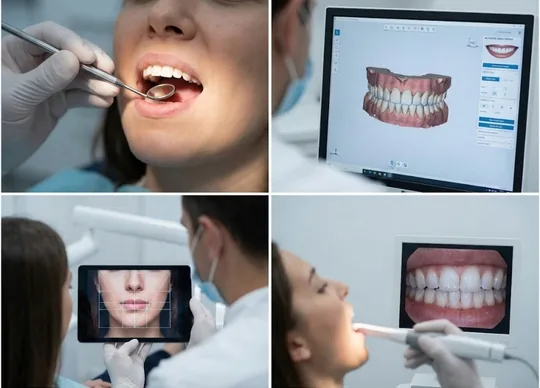
In the first stage, a detailed examination is carried out and an X-ray assessment is performed where necessary. Once the treatment plan has been established, the tooth to be veneered is reduced to a minimal degree. This step is necessary so that the veneer can fit onto the tooth properly.
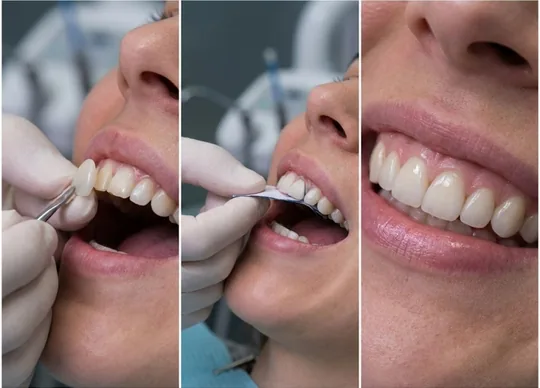
An impression is then taken and sent to the laboratory. A temporary veneer is applied to protect the tooth. The porcelain veneer prepared in the laboratory is checked at the try-in stage. Colour, shape and fit are assessed. If everything is suitable, it is permanently bonded in place using special adhesives.
The process is usually completed in a few sessions.
How Should Care Be Provided After Porcelain Veneers?
Care after veneer treatment is no different from natural tooth care. Brushing at least twice a day and regular flossing are recommended. Keeping the margin between the veneer and the gum clean is important.
Biting hard objects should be avoided. Regular check-up appointments should be attended to monitor the fit of the veneers and the health of the gums.
What Are the Differences Between Zirconia Crowns and Porcelain Veneers?
Zirconia crowns do not contain a metal substructure and have a white-coloured base. As a result, their light transmission is higher. This can provide an aesthetic advantage, particularly in the front tooth region.
In metal-supported porcelain veneers, on the other hand, the substructure contains metal. Their durability is high, but their light transmission is lower than that of zirconia. The choice of veneer is determined according to the position of the tooth, aesthetic expectations and functional needs.
How Long Do Porcelain Veneers Last?
The lifespan of porcelain veneers can vary on average between 10 and 15 years. However, this period can be extended depending on personal oral care habits, the presence of teeth clenching and regular check-ups.
Maintaining gum health directly affects the lifespan of the veneers. Well cared-for veneers can be used for a much longer period.
What Should Be Done After Porcelain Veneers Are Fitted?
Mild sensitivity may be felt on the first day after the procedure. This usually resolves quickly. It may be advisable to avoid very hard and sticky foods during the first few days.
Extra care should be taken with oral hygiene during the adaptation period for the veneers. If a feeling of high bite or a fit problem is noticed, a dentist should be consulted without delay.
With proper care and regular check-ups, porcelain veneers can be used safely for many years, both aesthetically and functionally.
Frequently Asked Questions
Porcelain veneers are thin porcelain restorations applied to the front surface of the teeth. They are suitable for teeth that are discoloured, broken, worn, or otherwise in need of aesthetic correction. They are preferred by individuals aiming for a natural, aesthetic smile.
The procedure is performed under local anaesthesia and no pain is felt. Short-term sensitivity may occur afterwards, but this is temporary and generally does not affect daily life.
With proper oral care and regular dental check-ups, porcelain veneers can be used trouble-free for an average of 10 to 15 years. The lifespan may vary according to personal habits.
Yes. Thanks to their light transmission, porcelain veneers closely resemble the appearance of natural teeth. For this reason, they are frequently preferred in aesthetic dentistry.
Daily brushing, flossing and regular check-ups extend the lifespan of the veneers. It is recommended to avoid biting hard objects with the teeth.