Composite filling is a tooth-coloured restorative material used to repair tooth structure lost to decay, fracture, or aesthetic imperfections. With the growing emphasis on aesthetics today, it has become one of the most frequently preferred types of filling.
Protective Treatment
Applied with minimal intervention while preserving healthy tooth structure.
Natural Colour Matching
Aesthetic harmony is achieved using materials matched to the natural tooth shade.
Functional Restoration
Chewing function and tooth anatomy are restored in a balanced manner.
Fast and Controlled Application
A predictable treatment option that can be completed in a single session.
What Is Composite Filling? A Modern Approach to Aesthetic Dental Restoration
Composite filling is a tooth-coloured restorative material used to repair tooth structure lost to decay, fracture, or aesthetic imperfections. With the growing emphasis on aesthetics today, it has become one of the most frequently preferred types of filling.
These composite-based materials consist of micro-fillers and resin-based bonding systems. Because they cure under light, they allow for controlled shaping during application.
In Which Cases Is Composite Filling Used?
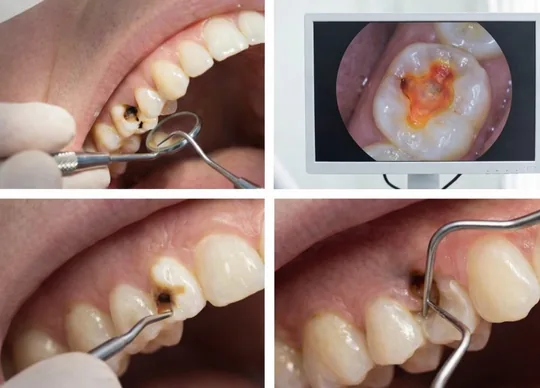
Composite filling is most commonly used in the treatment of tooth decay. After the decayed tissue has been removed, the resulting cavity is filled with a material matched to the natural tooth shade.
It may also be preferred in the following situations:
- Repair of broken or cracked teeth
- Aesthetic shape correction of the front teeth
- Closing gaps between teeth
- Aesthetic replacement of old amalgam fillings
Composite filling holds an important place in the minimally invasive dentistry approach, as it allows healthy tooth structure to be preserved.
How Is Composite Filling Performed?
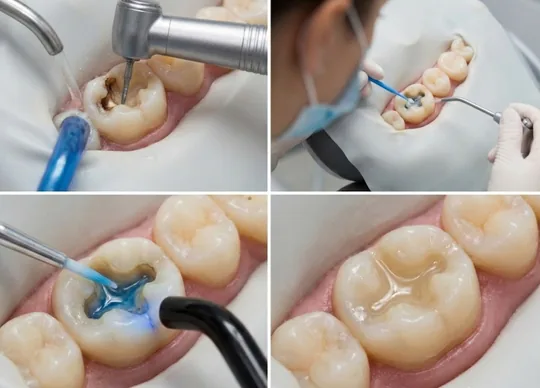
Composite filling application is usually completed in a single session. In the first stage, the decayed or damaged tissue is removed. The tooth surface is then roughened with a special etching acid, which helps the filling bond more effectively to the tooth.
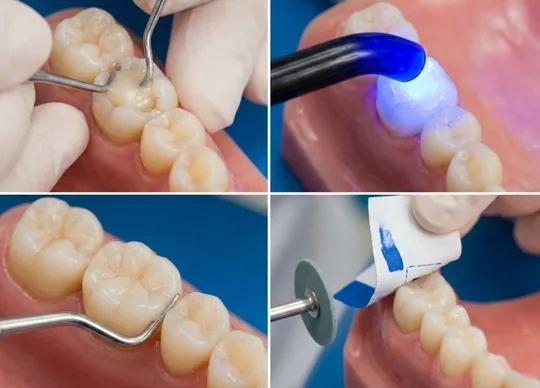
In the next stage, an adhesive bonding system is applied. The composite material is then placed in layers, with each layer cured using a special curing light.
This layered application technique aims to reduce polymerisation shrinkage. At the end of the procedure, the filling is shaped and polished, resulting in an appearance close to that of a natural tooth.
What Are the Advantages of Composite Filling?
| Advantage | Description |
|---|---|
| Aesthetic compatibility | Tooth-coloured appearance |
| Minimal tissue loss | Less tooth reduction required |
| Single-session application | Quick results |
| Repairability | Minor chips can be repaired |
In addition, composite filling can chemically bond to tooth structure. This bonding mechanism provides additional support alongside mechanical retention.
How Long Does a Composite Filling Last?
The lifespan of a composite filling depends on many factors. On average, a durability of 5 to 10 years has been reported. However, this period can vary depending on the patient's oral hygiene, chewing habits, and parafunctional habits such as teeth clenching.
| Contributing Factor | Effect on Filling Lifespan |
|---|---|
| Oral hygiene | Good hygiene means greater durability |
| Teeth clenching | May increase the risk of fracture |
| Material quality | Provides greater resistance |
| Application technique | Determines marginal fit |
Regular dental check-ups allow the marginal fit and surface integrity of the filling to be monitored. Minor issues detected early can be corrected easily.
What to Do After Composite Filling
- Avoid very hard foods in the first few hours
- Brush and floss regularly
- Do not skip routine dental check-ups
- Use a protective night guard if you clench your teeth
Although the filling cures under light, there may be a short adaptation period before it reaches full stability.
Does Composite Filling Cause Bad Breath?
Composite filling does not directly cause bad breath. However, if the filling margins do not fit well or secondary decay develops, bad breath may occur.
For this reason, regular check-ups and good oral hygiene are important. Odour is generally caused not by the filling material itself, but by bacterial build-up.
Does Composite Filling Turn Yellow?
Composite fillings can change colour over time. Pigmented substances such as coffee, tea, and cigarettes can cause surface staining.
Modern nano-hybrid composites offer improved colour stability. Nevertheless, regular surface polishing can help preserve the aesthetic appearance.
Is Composite Filling Permanent?
Composite filling can be long-lasting, but it cannot be considered permanent for life. The oral environment is constantly exposed to mechanical and chemical stress.
The durability of the filling is related to the application technique, material quality, and individual habits.
Why Do Composite Fillings Fall Out?
Composite fillings usually fall out due to bonding problems or excessive force. Habits such as teeth clenching or biting hard objects can increase this risk.
Secondary decay beneath the filling can also weaken its retention. In such cases, the restoration may need to be redone.
Can Composite Filling Break?
Although composite is a strong material, it can fracture under high pressure. This applies particularly to the back teeth, which are exposed to intense chewing forces.
Minor chips can usually be repaired. In cases of major damage, the filling may need to be replaced.
Composite filling is a modern restorative solution that can meet both aesthetic and functional needs at the same time. It is applied according to the principle of preserving tooth structure and delivers results close to a natural appearance.
With proper planning, correct technique, and regular care, it can be used trouble-free for many years. A holistic approach to dental health plays a decisive role in the success of these restorations.
Frequently Asked Questions
Composite filling is a tooth-coloured aesthetic filling material. It is chosen for both functional and aesthetic purposes, such as treating decay, repairing broken or cracked teeth, and correcting minor surface imperfections. It preserves smile aesthetics by providing a natural tooth appearance.
The procedure is usually performed under local anaesthesia, so no pain is felt during application. Afterwards, some people may experience mild sensitivity or temporary reactions to hot and cold, but this usually resolves on its own within a few days.
Composite fillings can last an average of 5–10 years, depending on the quality of the material used and the patient's oral care. Regular brushing, flossing, and six-monthly dental check-ups extend the filling's lifespan, while intense chewing forces and hard foods can shorten it.
It is recommended to avoid hard foods and not overload the teeth for 24 hours after the procedure. Regular oral hygiene, flossing, and six-monthly routine check-ups help keep the filling sound. You should also consult your dentist if you notice discolouration or sensitivity around the margins of the filling.
Composite filling is prepared using materials specially selected to match your tooth colour, preserving a natural appearance. By matching the shade and structure of the tooth, it offers an aesthetic solution for both front and back teeth, providing repair without creating any noticeable change to your smile.