

One of the most frequently asked-about topics in oral and dental health, an impacted tooth is a condition that can often progress unnoticed while affecting a person's quality of life. At its core, it refers to a tooth's failure to emerge into the mouth during its natural eruption process, due to the jawbone or neighbouring teeth blocking its path. Coming up particularly in young adulthood, an impacted tooth is treated not merely as a physical problem but as an oral health issue with social and psychological effects as well.
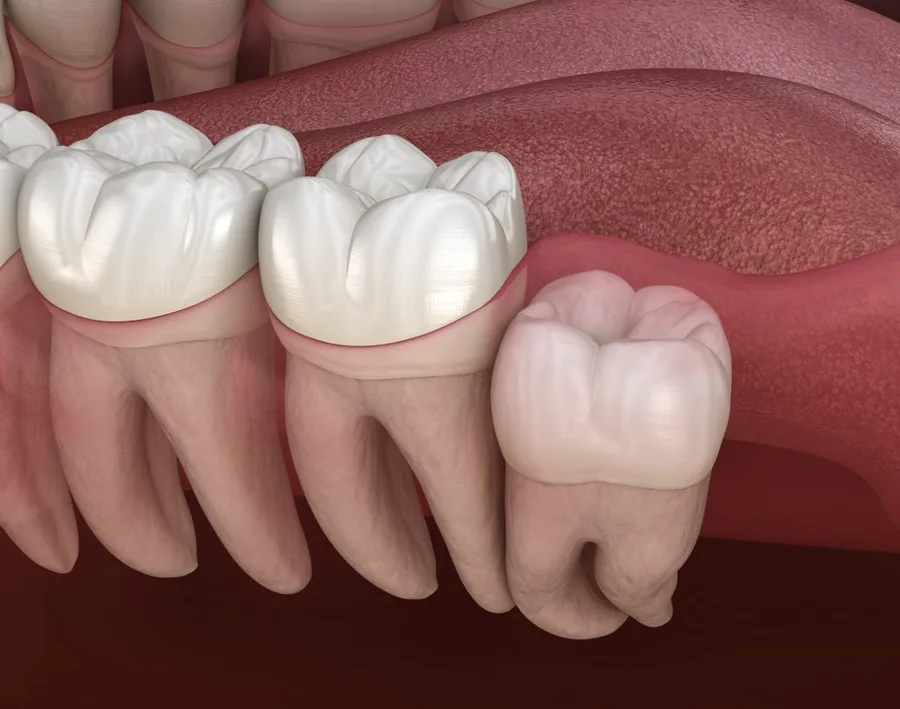
What Is an Impacted Tooth and How Is It Defined?
An impacted tooth refers to a tooth's failure to emerge into the mouth at its expected time and in its intended position. While this is most commonly associated with wisdom teeth, it can also occur in other tooth groups, such as canines and premolars. The structure of the jawbone, the alignment of the teeth, and genetic factors are among the main elements that influence this picture.
In the scientific literature, the term impacted tooth is broken down into different subcategories, such as a tooth remaining entirely within the bone or being partially visible beneath the gum. This distinction is made according to the tooth's position and its relationship with the surrounding tissue. Not every case of impaction presents the same clinical picture, which explains why the condition varies so much from person to person.
Research suggests that the evolutionary reduction in jaw size has increased the frequency of impacted teeth. Modern dietary habits and reduced chewing load can affect jawbone development, leaving insufficient space for teeth to erupt properly.
Why Does an Impacted Tooth Occur?
There is no single cause behind an impacted tooth. Usually arising from a combination of several factors, this condition reflects the complex nature of the mouth and jaw. One of the most common causes is a lack of sufficient space in the jawbone for the tooth to erupt.
Genetic predisposition plays an important role in the development of an impacted tooth. If similar cases are seen among family members, an individual's own likelihood of experiencing the same issue can increase. In addition, the early or late loss of baby teeth can affect the eruption path of the permanent teeth, laying the groundwork for impaction.
Another notable factor is deviation in the direction of tooth eruption. If a tooth bud develops at the wrong angle, the tooth may end up growing in a different direction within the bone. This is precisely why radiographic examination is so important in cases of an impacted tooth.
What Are the Symptoms of an Impacted Tooth?
Not every impacted tooth causes symptoms. In some people the condition can go unnoticed for years, while in others various signs may appear at an early stage. The severity and type of symptoms vary depending on the tooth's position and its relationship with the surrounding tissue.
The most commonly reported symptoms include a feeling of pressure in the jaw area, occasional pain, and gum sensitivity. In partially impacted teeth in particular, part of the gum being left exposed can make it easier for bacteria to build up, paving the way for the local discomfort associated with an impacted tooth.
In some cases, symptoms are felt indirectly. For example, a sense of crowding in neighbouring teeth, discomfort when opening the mouth, or changes in chewing function can all point to an underlying impacted tooth. For this reason, symptoms aren't always perceived as coming directly from the tooth itself.
How Is an Impacted Tooth Diagnosed?
An impacted tooth is diagnosed by evaluating clinical examination and imaging methods together. An intraoral examination can reveal swelling of the gum or the presence of a partially erupted tooth. In fully impacted cases, however, this method alone is not enough.
Panoramic X-rays are among the most commonly used imaging tools for assessing an impacted tooth. These images help reveal the tooth's position and angle within the bone, as well as its relationship with neighbouring teeth. In more complex cases, three-dimensional imaging techniques may also be preferred.
The diagnostic process isn't limited to confirming the tooth's presence. The condition of the tissue surrounding the impacted tooth, potential risks and long-term effects are also analysed. This multifaceted approach clearly shows why the condition needs to be assessed on an individual basis.
Which Teeth Are Most Commonly Affected by Impaction?
Statistical data show that the vast majority of impacted tooth cases involve wisdom teeth. This is mainly because these teeth attempt to erupt at the final stage of jaw development, by which point many people no longer have enough space left in the jawbone.
Canine teeth are also among the tooth groups with a high likelihood of impaction. Canines in the upper jaw in particular are assessed carefully due to their aesthetic and functional importance. If these teeth remain impacted, it can indirectly affect both tooth alignment and smile aesthetics.
Though rarer, an impacted tooth can also occur among the premolars. This variety shows that impaction isn't confined to a single tooth group, but is linked to the overall dynamics of the mouth's structure.
How Are Treatment Approaches for an Impacted Tooth Evaluated?
There is no one-size-fits-all approach when it comes to an impacted tooth. Treatment decisions are shaped by the tooth's position, its relationship with the surrounding tissue, and the individual's oral structure. For this reason, the concept of an impacted tooth represents a multifaceted analytical process rather than a standard procedure.
In the scientific literature, risk analysis underpins the approaches taken for an impacted tooth. Factors considered include whether the tooth is pressing on neighbouring teeth, any changes in space it creates within the bone tissue, and its possible long-term effects. In some cases, monitoring alone is considered sufficient, while in others intervention may come more to the fore.
What's notable here is that treatment decisions for an impacted tooth aren't expressed in absolute terms. As emphasised in the literature, every individual's mouth and jaw structure is unique, which makes the assessment process a personalised one.
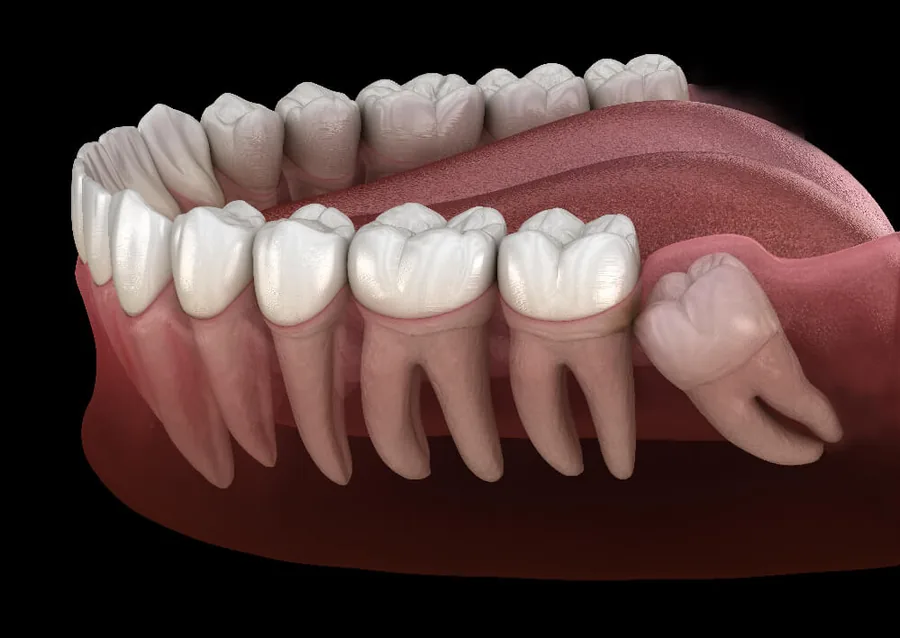
How Is the Extraction Process for an Impacted Tooth Planned?
Extracting an impacted tooth requires different planning from a standard tooth extraction. The process usually begins with a detailed imaging assessment, during which the tooth's depth within the bone, its angle, and its relationship with surrounding anatomical structures are analysed.
The extraction process can vary according to the type of impacted tooth. Fully impacted cases may require procedures involving the bone tissue, while partially impacted teeth may call for a more limited approach. These differences explain why the process varies from person to person.
Research reports indicate that when the extraction of an impacted tooth proceeds in a planned and controlled manner, it offers a predictable process. For this reason, extraction is regarded as a procedure with prior preparation, rather than a sudden intervention.
What Is the Process Like After Extraction of an Impacted Tooth?
The process that follows the extraction of an impacted tooth is a subject of just as much curiosity as the extraction itself. This period can be described as an adaptation phase in which the body's natural healing mechanisms take over. Each individual's healing speed and experience can differ.
Scientific observation shows that some tissue sensitivity may occur in the first few days after the extraction of an impacted tooth. This is related to the extent of the procedure and the tooth's position. However, the fact that this process changes gradually over time shows that healing is a dynamic process.
In the long term, noticeable changes in the position of neighbouring teeth or in chewing function can be observed after the extraction of an impacted tooth. These changes are usually linked to the re-establishment of balance within the mouth.
What Happens If an Impacted Tooth Is Not Removed?
An impacted tooth doesn't always require intervention. However, the literature notes that in some cases, leaving these teeth in place can have various consequences. At this point, definitive statements are avoided, and assessment is made in terms of possibilities.
Research suggests that the presence of an impacted tooth can create a sense of pressure in neighbouring teeth and lead to changes in alignment over time. It's also noted that bacteria can build up more easily in areas remaining beneath the gum.
Whether or not these effects occur depends on the position of the impacted tooth and the individual's oral hygiene habits. For this reason, it would be a generalisation to say that every impacted tooth left in place is bound to cause problems.
Scientific Data and Analysis on Impacted Teeth
Studies conducted in recent years show that the incidence of an impacted tooth is higher in the young adult population. Among the reasons for this are variations in jaw development and modern lifestyle factors.
The table below summarises the tendency towards impaction across different tooth groups:
|
Tooth Group |
Frequency Tendency |
|
Wisdom teeth |
High |
|
Canine teeth |
Moderate |
|
Premolars |
Low |
This data shows that the concept of an impacted tooth should be approached without focusing on a single tooth group alone. An analytical approach helps to better understand the multidimensional nature of the subject.
Key Points People Wonder About Regarding Impacted Teeth
Questions about an impacted tooth generally revolve around similar themes. At the centre of these questions are how the process unfolds, how long it takes, and its effects on a person's daily life. However, the answer to each question can vary due to individual factors.
Scientific sources emphasise that the subject of an impacted tooth cannot be adequately addressed from a single angle. Factors such as anatomical structure, age, and the tooth's position make every assessment unique. For this reason, information on the subject is presented within an explanatory framework rather than through generalisation.
Why Is an Impacted Tooth Such a Multifaceted Topic?
An impacted tooth isn't simply a matter of a tooth failing to emerge into the mouth. It's a multi-layered oral health issue in which anatomical, biological and environmental factors all converge — which is why it remains a focus of both scientific research and clinical observation.
Book an appointment for your smile
Get in touch with us for your questions and treatment options.