

When it comes to orthodontic treatment, metal braces stand out as a classic method that has been safely applied for many years and whose effectiveness is backed by scientific research. Used to correct dental crowding, spacing, bite irregularities and jaw misalignment, metal brace systems remain among the most commonly chosen orthodontic appliances today thanks to their durability and precise control.
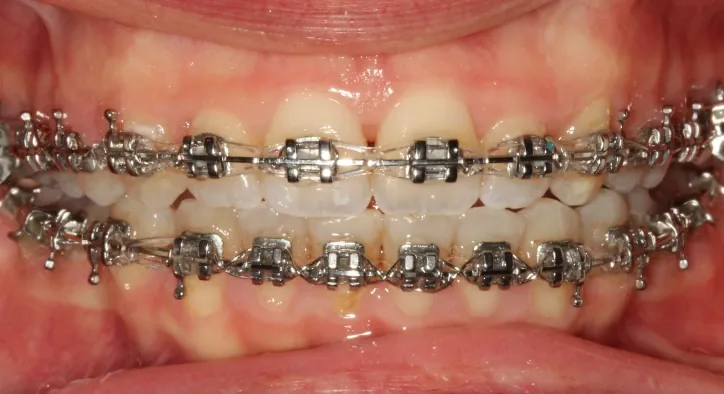
What Are Metal Braces and How Do They Work?
Metal braces are a fixed orthodontic system that applies controlled force to the teeth through brackets bonded to the tooth surface and archwires that run through them. This force, working with the bone tissue's natural biological response mechanisms, gradually guides the teeth into their desired position.
In orthodontic literature, this process is known as “bone remodelling”. The applied pressure triggers bone resorption on one side and bone formation on the other, allowing the teeth to shift position in a precise, controlled manner. Metal brace systems are considered among the most effective appliances for guiding this biomechanical process.
This treatment method is favoured particularly for complex cases because it offers a high degree of control. Since the three-dimensional movement of the teeth can be carefully planned, successful outcomes can be achieved even for individuals with severe crowding.
When Are Metal Braces the Preferred Option?
Orthodontic problems can cause functional as well as aesthetic issues. Crowded teeth may lead to difficulty chewing, speech problems, or make oral hygiene more challenging. In such cases, metal braces are considered an option that delivers both aesthetic and functional improvement.
Metal braces are generally recommended in the following situations:
- Severe dental crowding
- Upper and lower jaw bite irregularities
- Wide gaps between teeth
- Cases requiring guided eruption of impacted teeth
- Crossbite and open bite problems
Because bone metabolism is more active in younger patients in particular, the treatment process can be more predictable. However, metal braces can also be applied in adults, and adult orthodontics is seeing increasing demand today.
What Types of Metal Braces Are There?
Although often thought of as a single classic type, metal brace systems are divided into different designs. As technology has advanced, bracket structures and wire mechanisms have diversified as well.
1. Classic Ligature Metal Braces
In this system, the wire placed in the brackets is secured with small elastic ligatures. Control is high, and different wire combinations can be applied according to the orthodontist's treatment plan. This is the most widely known system when people think of metal braces.
2. Self-Ligating Metal Braces
In this model, the bracket has its own built-in clip instead of an elastic ligature. The wire is held in place by this clip. It is suggested that friction may be reduced and control achieved more precisely. Some clinical studies have reported varying results regarding its effect on treatment duration.
The table below summarises the main differences:
|
Feature |
Classic System |
Self-Ligating System |
|
Wire Fixation |
Elastic ligature |
Mechanical clip |
|
Friction |
Relatively higher |
Relatively lower |
|
Control |
High |
High |
|
Aesthetics |
Metallic appearance |
Metallic appearance |
Both types of metal braces rely on similar biomechanical principles. The choice is usually shaped by clinical assessment and individual needs.
What Are the Advantages of Metal Braces?
Because metal braces have been used for so many years, they are among the orthodontic systems with the most data available on clinical success rates. Their durability and resistance to breakage offer a significant advantage, particularly for individuals with an active lifestyle.
Their main advantages include:
- High durability
- Effective control in complex cases
- Wide flexibility in treatment planning
- Generally more affordable than other fixed systems
Metal braces also allow the orthodontist to guide tooth movement with millimetre precision. This is particularly important in cases requiring rotation and vertical movement.
Although being more visible aesthetically may be perceived as a disadvantage by some, coloured ligature options have in recent years become a fun element, particularly for younger patients.
What Determines the Price of Metal Braces?
The price of metal braces cannot be assessed as a single fixed figure. Pricing can vary depending on a number of factors.
These factors include:
- The complexity of the case
- The estimated length of treatment
- The bracket system used
- The need for additional appliances
- The clinic's infrastructure and level of expertise
Because orthodontic treatment is generally a long-term process, regular check-ups are also factored into the total cost when planning. Metal brace systems can often be considered a more affordable option compared with ceramic or lingual systems. However, since every individual's oral structure is different, a precise price can only be provided following a clinical examination.
At Doctor Afra, treatment plans are prepared specifically for each individual, following a transparent information process.
How Does the Metal Braces Treatment Process Work?
Metal brace treatment generally consists of several stages. A detailed clinical examination is carried out first. Panoramic X-rays, photographs and dental impressions are taken to create an individual treatment plan.
The brackets are then bonded and the archwires fitted. This procedure is usually completed in a single session. Afterwards, check-ups are carried out at regular intervals and the wires are changed. Each check-up is planned to adjust to the teeth's new position.
Although treatment duration averages between 12 and 24 months, this depends on individual factors. Maintaining good oral hygiene while wearing metal braces is an important factor supporting the success of the treatment.
Metal Braces and Aesthetic Perception
In the past, orthodontic treatment brought to mind the image of prominent metal brackets. Today, aesthetic concerns are more prominent. Despite this, metal braces are still preferred by a wide range of patients.
The main reasons for this preference include reliability, durability and many years of clinical experience. In addition, coloured elastic options give younger patients the opportunity to personalise their treatment.
Aesthetic concerns can be more pronounced for adult patients. However, many people choose the metal brace system, reasoning that the treatment process is temporary while the long-term benefit is what matters most.
An Informed Assessment of Metal Braces
Metal braces are one of the most established orthodontic methods, backed by the most scientific data. Their durability, precise control and adaptability to different case types give them a wide range of applications.
At Doctor Afra, our approach is based on the fact that every individual's oral structure is unique. For this reason, when planning metal brace treatment, we consider not only aesthetics but also functional and biological factors. Comprehensive assessment, individually tailored planning and a regular follow-up process form the foundations of successful treatment.
Before deciding on orthodontic treatment, it is important to understand all the options and weigh up their advantages and limitations. With the right planning, metal braces are a strong alternative capable of delivering satisfying results both aesthetically and functionally.
Book an appointment for your smile
Get in touch with us for your questions and treatment options.