

Night guards are a subject frequently discussed in modern dentistry, yet they're often not fully understood. Jaw movements that go unnoticed during the day, combined with the clenching and grinding behaviours that emerge during sleep, can have a noticeable effect on oral and jaw health. This is exactly where the night guard comes in, as a protective and stabilising aid.
What Is a Night Guard and How Is It Defined?
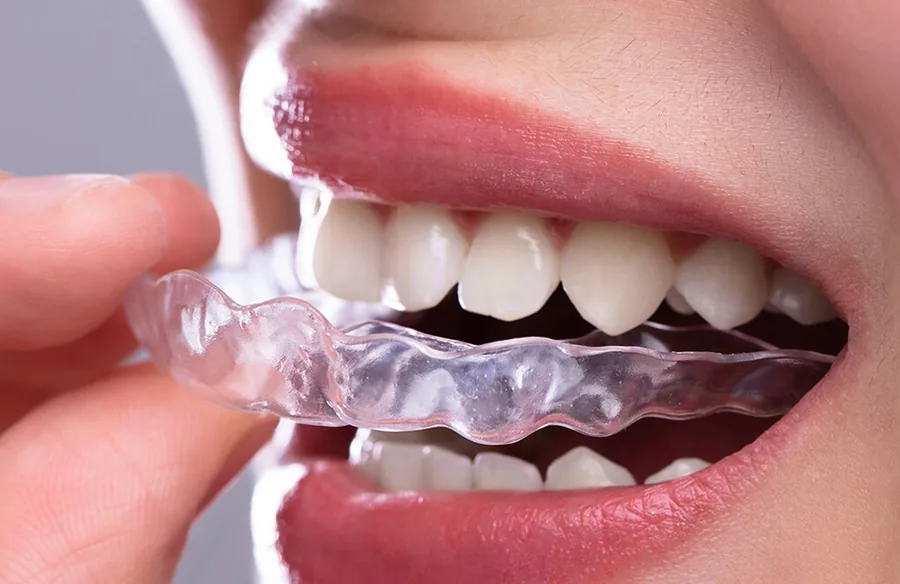
A night guard is a clear, removable oral appliance, usually custom-made to fit either the upper or lower row of teeth. It sits between the teeth and is designed to reduce direct contact between the tooth surfaces caused by jaw movements throughout the night.
Also known in scientific sources as an occlusal splint or bruxism appliance, the night guard is regarded in dental practice as both a protective and a stabilising tool. The main aim here is to create a more balanced distribution of load between the chewing muscles and the teeth.
Appliances like these aren't mass-produced — they're made to measure, based on the individual's oral anatomy. This means that using a night guard is always a personalised experience.
What Does a Night Guard Do?
What does a night guard actually do? It's a question almost everyone asks when they first come across the subject, and the answer isn't limited to a single benefit.
First and foremost, a night guard acts as a buffer between the tooth surfaces, helping to prevent the wear that can result from teeth grinding against one another. It also helps distribute the pressure that builds up around the jaw joint more evenly.
Research indicates that people who use a night guard tend to become aware of morning jaw fatigue and tooth sensitivity sooner. In other words, the appliance doesn't just protect — it also gives people the chance to become more aware of their own oral habits.
Who Is a Night Guard Suitable For?
The use of a night guard is generally associated with people who clench or grind their teeth. However, the subject is broader than that.
A night guard may be considered for people who notice they clench their jaw during sleep, feel fatigue in the jaw area in the mornings, or experience unexplained wear on their tooth surfaces. Studies also suggest that these kinds of oral habits are more common in people leading high-stress lifestyles.
What matters here is that the use of a night guard should be assessed according to individual needs — it isn't expected to have the same effect for everyone.
What Types of Night Guard Are There?
It wouldn't be accurate to talk about the night guard as a single type of product. Different types exist depending on their intended use and the material they're made from.
The table below shows the common types of night guard:
|
Type of Night Guard |
General Characteristics |
|
Hard night guard |
More durable structure, suited to long-term use |
|
Soft night guard |
Comfort-focused, quick to adapt to |
|
Hybrid night guard |
Combines hard and soft layers |
This variety clearly shows why the night guard needs to be approached on a personalised basis — no two oral structures or habits are exactly the same.
Night Guards and Their Relationship to Teeth Clenching
Teeth clenching, or bruxism, is one of the topics most frequently mentioned alongside the night guard. The exact cause of bruxism isn't always clear — factors such as stress, sleep patterns and the way the jaw closes can all play a role together.
The night guard aims to limit the effect of this behaviour on the teeth. In other words, rather than claiming to eliminate clenching altogether, it focuses on managing its consequences. This approach is in line with the protective strategies frequently adopted in modern dentistry.
What Is It Like to Use a Night Guard?
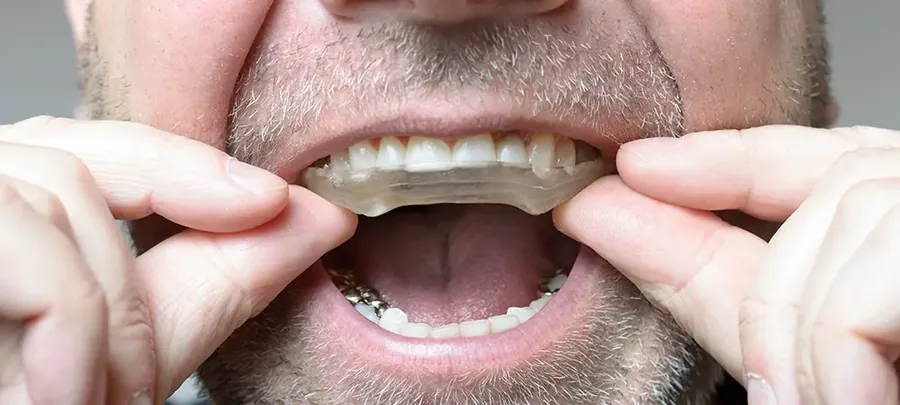
For people using a night guard for the first time, the adaptation period is often a source of curiosity. It's quite common to feel like there's a foreign object in the mouth during the first few days, but this sensation usually fades quickly.
A night guard is worn only during sleep and removed in the morning. Once a daily routine is established, many users report being able to sleep without even noticing the appliance. What matters here is that the guard fits the individual's oral structure properly.
Cleaning and Caring for a Night Guard
Caring for a night guard is just as important as using it. As with any appliance used inside the mouth, hygiene is a key consideration.
Cleaning with water and a soft brush is generally considered sufficient. Using very hot water can distort the shape of the night guard, so regular checks are also important for maintaining the appliance's structural integrity.
A night guard that isn't properly cared for may not provide the expected level of comfort. This is why a maintenance routine should be established alongside the habit of using it.
Common Misconceptions About Night Guards
Some of the misinformation circulating about night guards can affect users' expectations. For example, the idea that the appliance alone will solve every jaw problem isn't realistic.
A night guard is considered a supportive aid rather than a treatment in itself. There are also significant differences between off-the-shelf products and custom-made appliances, and this difference matters greatly for long-term comfort and fit.
How Is the Night Guard Assessed from a Scientific Perspective?
In academic studies, the night guard is generally considered within the scope of preventive dentistry. The aim is to protect tooth surfaces from mechanical load and to help the jaw muscles work in a more balanced way.
This approach is consistent with the modern healthcare philosophy that prioritises non-invasive methods. For this reason, the night guard sits at the intersection of several different disciplines.
A General Assessment of the Night Guard
The night guard stands out as an oral appliance that may look simple but has far-reaching effects. It aims to bring greater balance to the relationship between the teeth, the jaw joint and the surrounding muscles.
Book an appointment for your smile
Get in touch with us for your questions and treatment options.