

Teeth clenching is one of those invisible oral habits of modern life whose effects are nonetheless keenly felt. Many people clench their teeth without realising it, whether during the day or while asleep. Although this may sometimes seem like a brief, passing reflex, over the long term it can lead to significant changes in the teeth, the jaw joint and the facial muscles.
What Is Teeth Clenching, and How Is the Concept of Bruxism Defined?
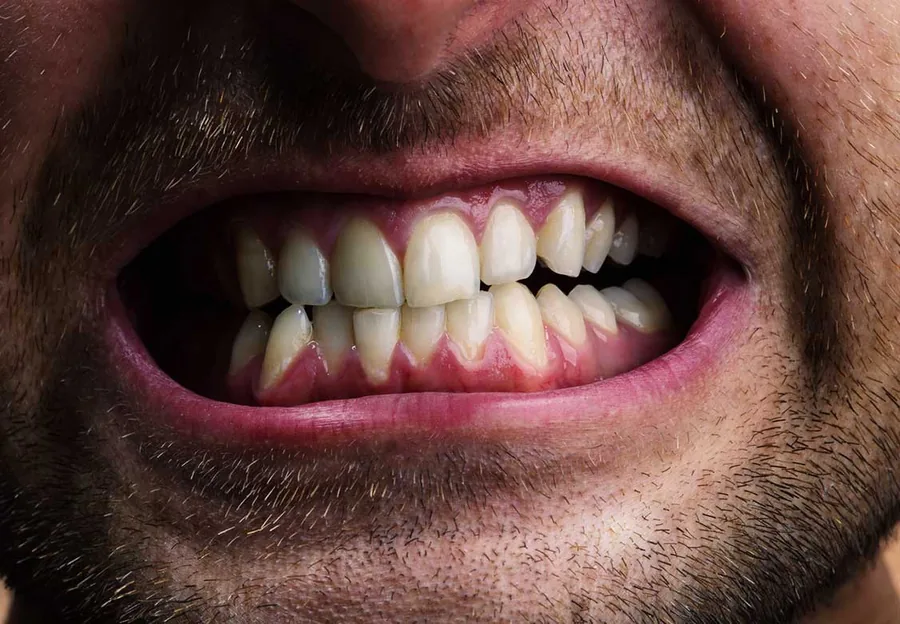
Teeth clenching is the forceful pressing together of the upper and lower teeth, whether consciously or unconsciously. In dental literature, this is frequently referred to by the term bruxism. Bruxism is a jaw activity that isn't limited to the sound of teeth grinding — it can sometimes progress entirely silently.
Research shows that teeth clenching can occur not only during sleep, but also during moments of intense focus throughout the day. Unnoticed contraction of the jaw muscles is quite common while working at a computer, during a stressful conversation, or during activities that require sustained concentration.
What's notable here is that people often only become aware of their teeth clenching quite late on. Progressing without obvious symptoms, this condition tends to reveal itself through changes in the tooth surfaces, tension in the jaw muscles, or fatigue felt upon waking.
What Causes Teeth Clenching? Scientific Perspectives
The causes of teeth clenching cannot be reduced to a single factor. Scientific publications reveal that this condition arises from a combination of biological, psychological and environmental influences.
From a neurological perspective, teeth clenching is associated with irregularities in the signalling between the central nervous system and the chewing muscles. Sudden contractions of the jaw muscles, particularly during certain sleep stages, can cause the teeth to make involuntary contact.
Psychosocial factors also play a significant role in teeth clenching. Academic studies show that rates of clenching and grinding are higher among individuals under intense stress. This is because the jaw muscles contract reflexively at moments of stress.
How Does Teeth Clenching Differ Between Day and Night?
Teeth clenching is generally examined under two main categories: clenching that occurs while awake, and clenching that occurs during sleep.
Daytime clenching is often noticeable — a person may feel, in the moment, that they are clenching their jaw. This is usually related to prolonged concentration, stress, or habit. A feeling of stiffness in the jaw muscles is the most common sign of this type of clenching.
Night-time clenching, on the other hand, progresses more insidiously. A person often only becomes aware of it upon waking, through jaw fatigue or a headache. Scientific sources note that sleep bruxism places greater pressure on the jaw joint.
How Does Teeth Clenching Affect Tooth Structure?
Teeth clenching places pressure on the teeth far beyond normal chewing forces. Over time, this pressure can lead to microscopic cracks in the enamel. Invisible to the eye at first, these cracks can later cause increased tooth sensitivity.
Research shows that individuals with a long-standing teeth-clenching habit experience shortened tooth length and flattened cutting edges. This isn't merely a cosmetic change — when the natural anatomy of the teeth is disrupted, chewing function can be affected too.
The table below summarises the common tooth-surface changes associated with teeth clenching:
|
Area Affected |
Observed Change |
|
Tooth Enamel |
Wear and loss of shine |
|
Tooth Edges |
Flattening |
|
Tooth Surface |
Micro-cracks |
|
Sensitivity |
Increased response to hot and cold |
What Effect Does Teeth Clenching Have on the Jaw Muscles and Joint?
Teeth clenching doesn't affect only the teeth. Because the jaw muscles remain continuously active during this process, muscle fatigue becomes inevitable. Scientific measurements show that individuals with bruxism have a higher level of muscle tone in their chewing muscles.
From the perspective of the jaw joint, teeth clenching can create uneven pressure on the joint surfaces, which over time can lead to changes in the joint's range of movement. In some individuals, clicking sounds or a feeling of stiffness when opening the mouth are interpreted as a consequence of this process.
In cases evaluated by Doctor Afra, it has been observed that a long-standing teeth-clenching habit can even lead to a perceived asymmetry in the facial muscles. This is particularly noteworthy for individuals with an interest in aesthetics.
Why Do the Symptoms of Teeth Clenching Often Go Unnoticed?
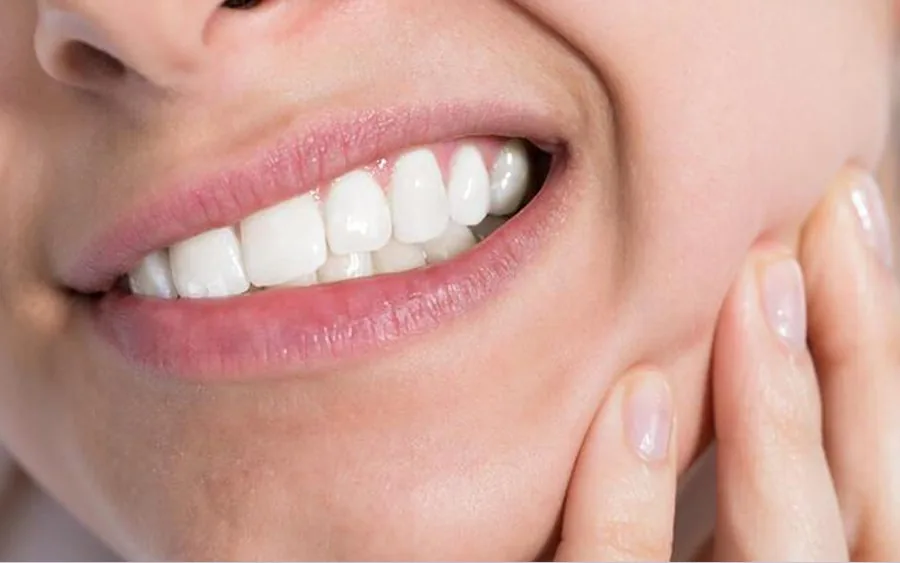
Most symptoms of teeth clenching progress slowly, which means a person may perceive the resulting changes as a normal part of everyday life. Morning headaches, jaw fatigue, or mild tooth sensitivity are often attributed to other causes.
Scientific publications note that teeth clenching is often first identified during routine dental check-ups. Symmetrical wear on the tooth surfaces and muscle tenderness are among the key clues to this habit.
What's notable here is that as awareness of teeth clenching grows, individuals' outlook on oral health tends to change too. People who pay attention to their own jaw movements are able to notice this habit at an earlier stage.
What Long-Term Problems Can Teeth Clenching Lead To?
Although teeth clenching may seem like an unnoticeable habit in the short term, it can trigger a chain of effects across the mouth and jaw system over time. Scientific observation shows that this condition affects not just the tooth surfaces but the entire chewing system.
A long-standing teeth-clenching habit can alter the natural contact balance between the teeth. This uneven contact causes chewing load to concentrate on certain areas, which can result in some teeth wearing down faster than others.
The long-term effects associated with teeth clenching are summarised below:
- Shortening of the teeth
- Permanent wear on the enamel
- A feeling of chronic tension in the jaw muscles
- A perceived restriction in jaw joint movement
- A feeling of increased bulk in the facial muscles
These effects can develop at different rates from person to person, and it often takes time for them to be noticed.
The Relationship Between Teeth Clenching and Aesthetic Perception
Teeth clenching isn't just a functional issue — it's also a factor that affects aesthetic perception. As teeth shorten over time, this can lead to changes in the smile line. Although these changes are often attributed to ageing, teeth clenching can be one of the underlying causes.
The jaw muscles remaining continuously active can lead to more pronounced muscle contours, particularly in the lower part of the face. Scientific analysis shows that individuals with a long-standing teeth-clenching habit have a more prominent masseter muscle volume.
In aesthetic cases evaluated by Doctor Afra, it has been observed that teeth clenching can indirectly affect the perceived symmetry of the smile. For this reason, teeth clenching has become a subject not only for dentistry, but also for facial aesthetics.
What Does Research Say About Teeth Clenching?
Academic studies on teeth clenching show that this habit is more widespread than commonly believed. Population-based research carried out in various countries has found that a significant proportion of adults show signs of bruxism at some point in their lives.
Some studies note that teeth clenching tends to track alongside stress levels, while others draw attention to sleep patterns and neuromuscular activity. This clearly shows that teeth clenching isn't a one-dimensional habit.
The table below provides a general summary of the key research findings from the literature:
|
Research Focus |
Findings |
|
Sleep Bruxism |
Increased jaw muscle activity |
|
Daytime Clenching |
Stress-related muscle contraction |
|
Tooth Wear |
Symmetrical surface loss |
|
Jaw Muscles |
Increased muscle volume |
This data shows that teeth clenching needs to be approached from an interdisciplinary perspective.
How Can Teeth Clenching Be Noticed in Daily Life?
Because teeth clenching often progresses silently, it tends to reveal itself in daily life through small signs. These signs are usually indirect and can easily go unnoticed if not paid attention to.
Some common observations in daily life that can be linked to teeth clenching include:
- A feeling of jaw fatigue upon waking in the morning
- Unknowingly keeping the jaw clenched during the day
- Tiring quickly when eating hard foods
- Noticing rough patches on the tooth surfaces
These kinds of signs don't carry a definitive meaning on their own. However, when observed together, they can point to a teeth-clenching habit.
Why Is Awareness of Teeth Clenching Important?
Teeth clenching awareness is key to being able to observe the habit at an early stage. Recognising one's own jaw movements and regularly checking the tooth surfaces makes it easier to notice the effects of this habit more clearly.
Scientific publications note that individuals with high awareness of teeth clenching approach their oral health check-ups more consciously, which allows any changes in the teeth and jaw structure to be noticed at an earlier stage.
In the Doctor Afra approach, teeth clenching is treated not merely as a problem to be solved, but as an area of awareness for understanding the mouth and jaw system as a whole.
Why Should Teeth Clenching Be Taken Seriously?
Although teeth clenching may seem like a simple habit, it can have a marked long-term effect on the teeth, jaw muscles and facial aesthetics. Because these effects tend to develop slowly, they can take time to notice.
Book an appointment for your smile
Get in touch with us for your questions and treatment options.