

When it comes to oral health, replacing missing teeth matters both aesthetically and functionally. Dental implants are considered among the most reliable and biocompatible solutions offered by modern dentistry. Thanks to today’s advanced technologies, dental implant treatments don’t just replace a missing tooth — they also help preserve the jawbone.
What Is a Dental Implant and How Does It Work?
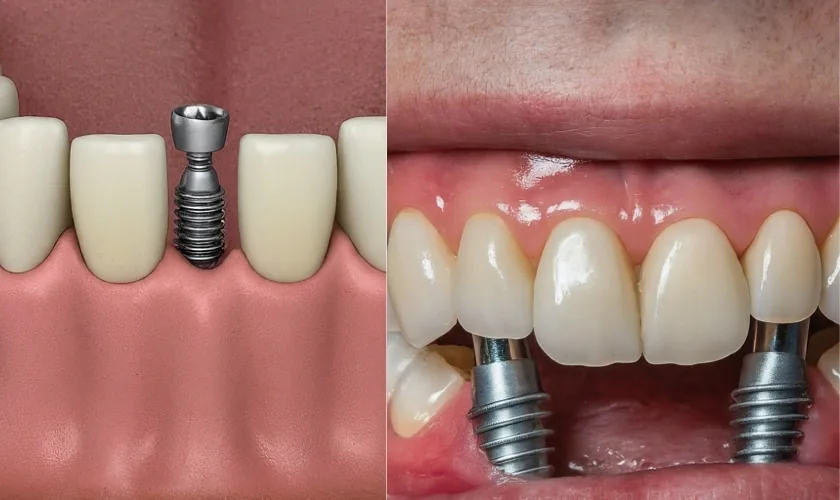
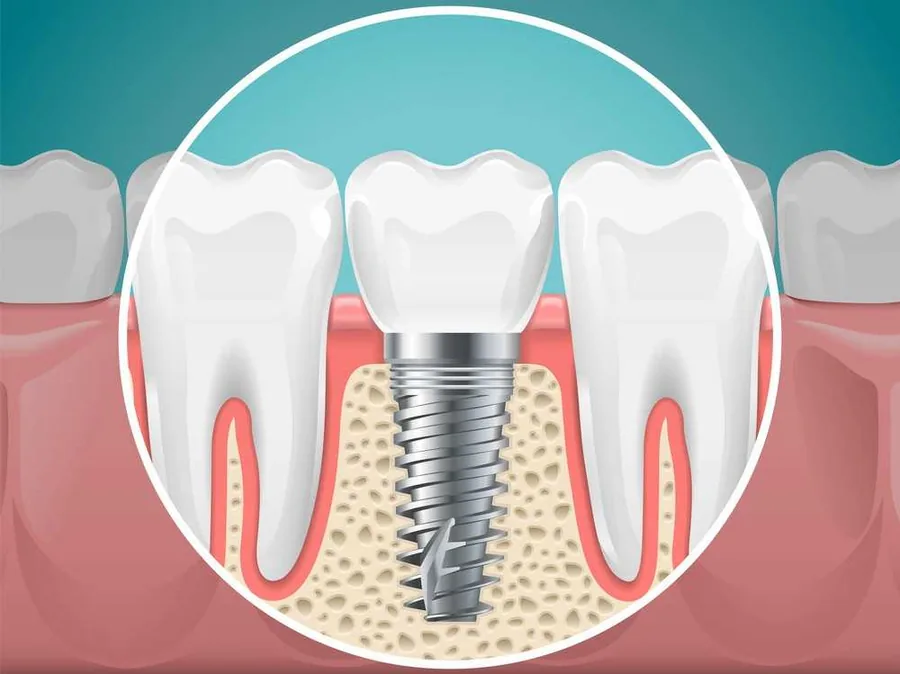
A dental implant works on the principle of placing an artificial root, made of titanium or zirconium, in place of the missing tooth root. This root fuses biologically with the jawbone, and a prosthetic tooth is then fixed on top of it. This process is known as osseointegration.
Scientific research shows that the microscopic bond between the bone and the implant surface provides stability similar to that of a natural tooth root. As a result, a dental implant can offer a more natural chewing force compared with bridges or removable dentures. It also doesn’t require adjacent teeth to be filed down, which is a further protective advantage.
What Are the Types of Dental Implants?
Every patient has a different bone structure, number of missing teeth, and aesthetic expectations. For this reason, different dental implant types are applied using different techniques.
Main types:
|
Type |
Feature |
Area of Use |
|
Endosteal |
Placed within the bone |
The most common method |
|
Subperiosteal |
Placed on top of the bone |
Patients with low bone volume |
|
Zirconium |
Metal-free structure |
Aesthetic sensitivity |
|
All-on-Four |
Fixed prosthesis with 4 implants |
Complete tooth loss |
The endosteal dental implant is the most commonly preferred system. Due to its high success rates, it is regarded as the standard treatment. In cases where bone volume is insufficient, alternative designs come into play.
Zirconium-based dental implant systems, meanwhile, are considered for individuals with metal sensitivities or those who want a whiter aesthetic result.
In Which Cases Can a Dental Implant Be Used?
Many people wonder whether they are suitable candidates for a dental implant. In general, its range of use is broad, from a single missing tooth to complete tooth loss.
The following factors are examined when assessing suitability:
- Jawbone density
- General oral hygiene
- Overall systemic health
- Smoking habits
- Healing capacity
In individuals with sufficient bone volume, a dental implant can produce more predictable results. If bone loss is present, supportive procedures such as grafting can be planned. Treatment is therefore not one-size-fits-all — it is tailored to the individual.
How Is the Dental Implant Planning Process Carried Out?
The foundation of successful dental implant treatment is correct planning. Today, thanks to digital imaging and three-dimensional tomography techniques, jaw anatomy can be analysed in detail.
At this stage:
- Bone thickness is measured
- Distances to the nerve and sinus are calculated
- The appropriate implant diameter is selected
- A surgical guide can be designed
This scientific approach allows the dental implant to be placed with millimetre precision, resulting in more balanced aesthetic and functional outcomes. Doctor Afra applies digital planning as standard protocol.
Advantages and Functional Benefits of Dental Implants
The most notable aspect of modern dental implant treatment is that it offers the solution closest to a natural tooth. Thanks to its fixed structure, it doesn’t move during speaking or chewing.
Key advantages:
- May slow down bone loss
- Does not damage adjacent teeth
- Potential for long-term use
- Natural aesthetic appearance
- Comfortable to use
Research shows that a well-maintained dental implant system can remain stable for years. It also requires less maintenance than dentures, which can improve day-to-day quality of life.
Healing and Process Dynamics After Dental Implant Surgery
After the surgical procedure, fusion between the bone and the implant takes a certain amount of time. This process usually lasts a few months, and the rate of biological healing can vary from person to person.
Mild sensitivity may be noticed in the first few days. This is a normal tissue response. Temporary prostheses may be used during the dental implant process, which progresses under the dentist’s supervision.
Regular check-ups are important for maintaining the health of the tissues around the implant. Paying attention to oral hygiene is among the factors that directly affect the success of a dental implant.
Dental Implant Solutions from a Single Tooth to a Full Mouth
While some patients are only missing a single tooth, others may have complete tooth loss. Dental implant strategies differ accordingly.
- A single implant for a single missing tooth
- Bridge-supported implants for multiple missing teeth
- All-on-Four or All-on-Six systems for complete tooth loss
Thanks to these techniques, the entire jaw can be restored with a fixed prosthesis using only a small number of dental implants. This optimises both cost and surgical time.
Scientific and Personal Factors in Choosing a Dental Implant
Not every dental implant brand or system is the same. Surface technology, design and material quality can all affect long-term performance.
When making a choice, factors such as:
- Clinical experience
- The biocompatibility of the materials used
- Sterilisation standards
- Digital infrastructure
- The specialist dentist’s approach
should be evaluated. By bringing these criteria together, Doctor Afra aims to offer reliable, evidence-based solutions in dental implant treatment.
Dental Implants: A Modern Rehabilitation Option
In summary, the dental implant is recognised as a contemporary rehabilitation method for replacing missing teeth, both aesthetically and functionally. Thanks to the different types of dental implant available, suitable alternatives can be produced for almost any clinical situation. With correct planning, expert care and regular maintenance, this treatment can offer long-term comfort.
Doctor Afra’s patient-focused perspective aims to address oral health holistically through personalised dental implant solutions. This evidence-based approach makes it easier to achieve sustainable, balanced results.
Book an appointment for your smile
Get in touch with us for your questions and treatment options.