

Bleeding gums is an oral health symptom that most people encounter at least once in their lives, yet it's one that's often taken too lightly. A few drops of blood seen in the sink while brushing may seem insignificant at first glance, but this can sometimes be a sign of more complex processes taking place inside the mouth. Bleeding gums shouldn't be thought of as a problem confined to the gums alone — it needs to be considered alongside the overall state of oral health.
What Causes Bleeding Gums and How Does It Happen?
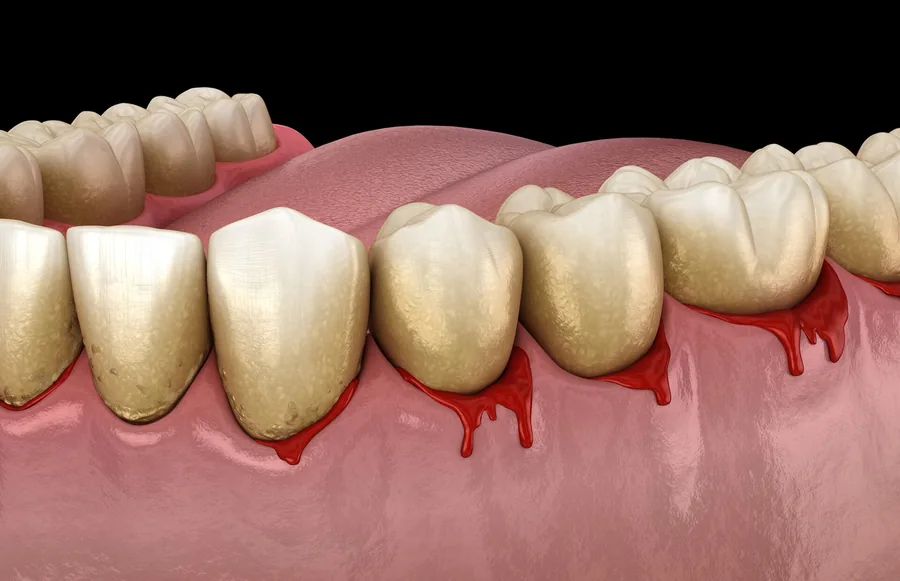
Bleeding gums occur when the tissue in the gums becomes sensitised and the capillaries leak blood to the surface. It's most often noticed while brushing or flossing, though in some people it can also appear spontaneously, without any contact at all.
The process behind bleeding gums usually starts with bacterial plaque building up in the mouth. This plaque disrupts the gum's natural structure and can trigger an inflammatory response. During this process, the gum tissue becomes more permeable and sensitive, meaning even simple mechanical contact can cause bleeding.
This doesn't always happen for the same reason. A person's oral hygiene habits, saliva composition, tooth alignment and even their day-to-day stress levels can all influence bleeding gums.
The Link Between Bleeding Gums and Gum Disease
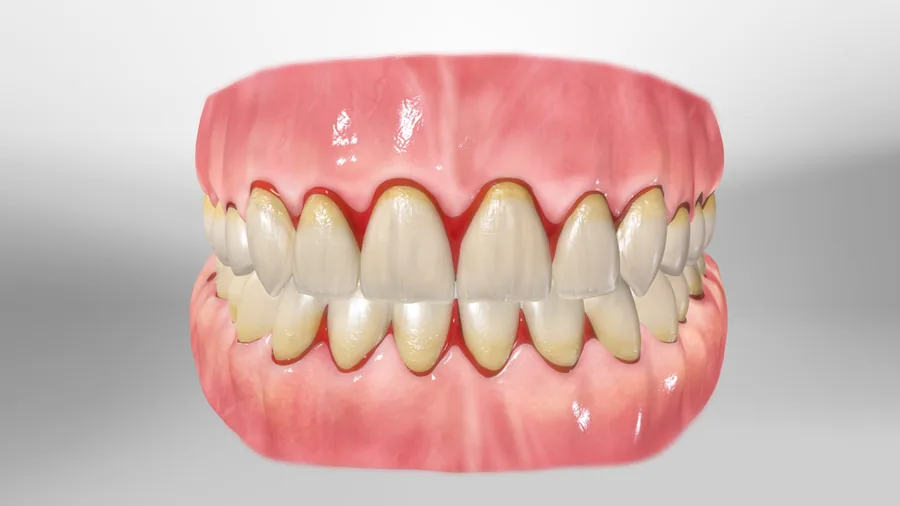
Bleeding gums are recognised as one of the earliest signs of gum disease. In particular, the superficial gum inflammation known as gingivitis can reveal itself through bleeding. At this stage, the gums typically appear red, swollen and shiny.
As the condition progresses, bleeding gums can become more frequent and more pronounced. Once the periodontal tissue starts to be affected, bleeding may be noticed not only while brushing but also while chewing. At this point, both the duration and the frequency of the bleeding can increase.
The relationship between gum disease and bleeding gums isn't linear — in other words, not every instance of bleeding necessarily indicates an advanced condition. However, bleeding that recurs regularly can be a sign that the balance inside the mouth has been disrupted.
How Is Bleeding Gums Noticed in Everyday Life?
Bleeding gums doesn't always present itself dramatically — noticing it often requires a degree of attention. A pink tinge on the toothbrush, traces of blood on floss, or a metallic taste in the mouth in the morning can all accompany this condition.
In some people, bleeding gums only appear when eating hard foods. The slight trauma caused by chewing fibrous foods such as apples or carrots can lead to bleeding in sensitive gums. This offers clues about the overall resilience of the gum tissue.
Looking in the mirror, discolouration along the gum margins, mild swelling or changes in surface texture are among the signs that can accompany bleeding gums. These details are often overlooked, yet they are readable signals of oral health.
Bleeding Gums and Systemic Factors
Bleeding gums isn't limited to factors within the mouth alone. The body's overall condition can also directly affect gum tissue. Fluctuations in hormone levels, responses from the immune system and changes related to the circulatory system can all set the stage for this condition.
For example, at certain times the gum tissue can become more sensitive, increasing the likelihood of bleeding gums. This sensitivity can be either temporary or long-lasting. What matters here is the duration and frequency of the bleeding, along with any other accompanying symptoms.
Research shows that the tissue inside the mouth is highly sensitive to the body's overall physiological state. This means bleeding gums can sometimes be linked to processes occurring elsewhere in the body. However, it isn't sound to draw broad conclusions from a single symptom alone.
When Does Bleeding Gums Become a Cause for Concern?
While bleeding gums can be temporary in some cases, in others it can become a sign that warrants closer attention. Bleeding that has persisted for a long time, occurs spontaneously, or increases in volume is assessed differently.
The table below summarises the general characteristics of different situations related to bleeding gums:
|
Observed Situation |
General Interpretation |
|
Only while brushing |
May be due to mechanical sensitivity |
|
Spontaneous bleeding |
Tissue sensitivity may have increased |
|
Continuous, heavy bleeding |
The balance inside the mouth may be disrupted |
|
Accompanied by swelling and discolouration |
Inflammatory processes may be involved |
This table offers a general framework for how cases of bleeding gums can be classified. Because everyone's oral anatomy is different, assessment should always be done on an individual basis.
Common Misconceptions About Bleeding Gums
There are many misconceptions circulating about bleeding gums. One is the belief that brushing should be stopped altogether if bleeding occurs. In fact, this approach can cause the balance inside the mouth to deteriorate even further.
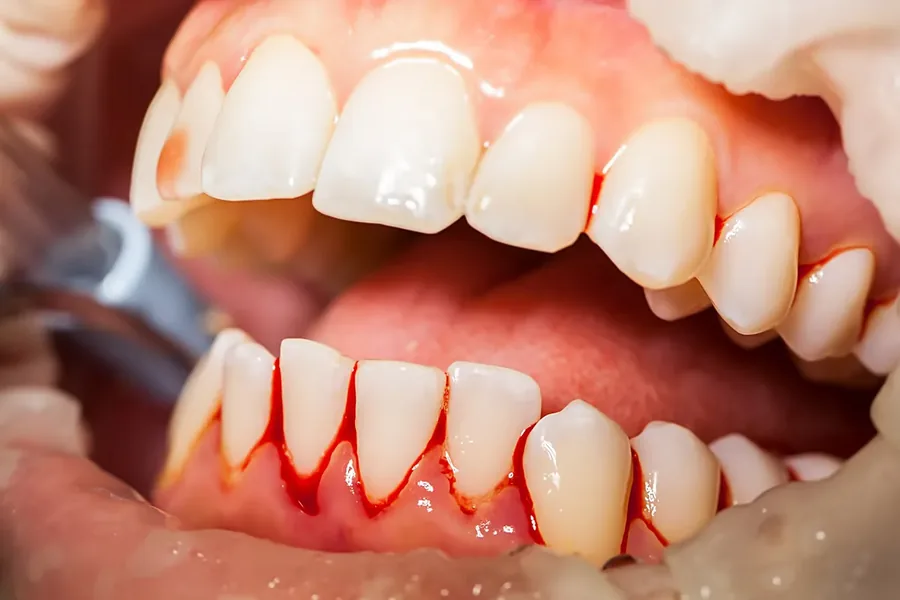
Another misconception is the idea that bleeding gums only affects older people. In reality, it can be observed in younger age groups too. The way gum tissue responds isn't limited by age — it depends on environmental and individual factors.
Bleeding gums also isn't always accompanied by pain, which means painless bleeding can more easily go unnoticed. This doesn't make the symptom any less significant — it simply makes it harder to spot.
A Scientific Perspective on Bleeding Gums
In the scientific literature, bleeding gums is regarded as one of the early warning signs of oral health. Observational studies frequently highlight a direct link between bleeding gums and the level of oral hygiene.
That said, bleeding gums is not treated as a diagnostic criterion on its own. In clinical assessments, it's usually interpreted alongside other findings. This approach helps prevent inaccurate generalisations.
From Doctor Afra's perspective, bleeding gums is treated not as an end result but as an indicator of an ongoing process. This outlook makes it possible to assess oral health within a holistic framework, rather than a purely localised one.
What Does Bleeding Gums Tell Us?
Bleeding gums is a sensitive indicator of the balance within the mouth. Sometimes it can arise from simple mechanical action, and sometimes it can be the surface reflection of deeper processes. What matters is approaching it with a holistic perspective, rather than ignoring it or reducing it to a single cause.
Book an appointment for your smile
Get in touch with us for your questions and treatment options.