

Brackets, one of the fundamental building blocks of orthodontic treatment, are small yet effective appliances that allow the teeth to move in a controlled and planned way. As aesthetic expectations have grown and functional tooth alignment has gained importance, bracket systems have undergone a significant evolution in both technique and materials. The modern orthodontic approaches used at the Doctor Afra clinic follow these developments closely in order to produce personalised solutions.
What Are Brackets and What Role Do They Play in Orthodontics?
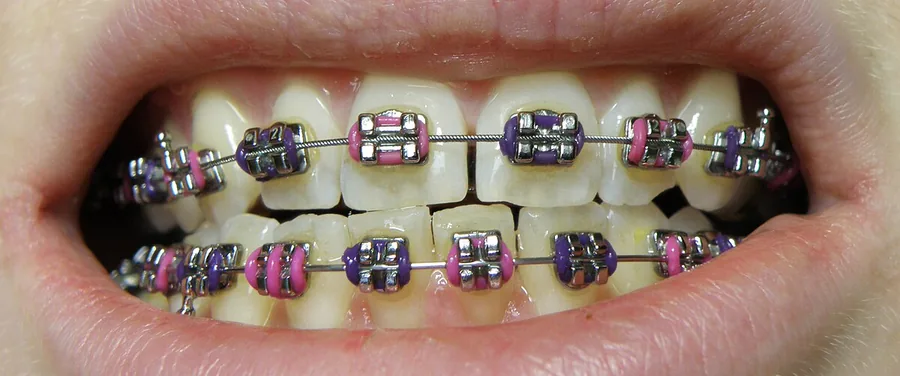
Brackets are small orthodontic attachments bonded to the tooth surface with special adhesive materials, through which an archwire passes. This system allows specific forces to be transmitted to the teeth. These controlled forces are transferred through the periodontal ligament to the bone, gradually changing the position of the tooth over time.
In the orthodontic literature, bracket systems are considered one of the most important components of fixed orthodontic treatment. Working together with the archwire, ligatures and elastic modules, this structure allows for three-dimensional tooth movement. Many clinical goals, such as correcting rotation, improving the bite relationship and resolving crowding, can be achieved with a correctly planned bracket mechanism.
The biological basis of tooth movement is bone remodelling. When a light, continuous force is applied, resorption occurs on one surface of the bone while apposition occurs on the other. This process highlights the importance of controlled orthodontic forces.
What Are the Types of Brackets?
The types of brackets used in orthodontics can be classified according to material, design and method of attachment. Each system has its own advantages and limitations.
1. Metal Bracket Systems
Metal brackets are made from stainless steel and are strong in terms of durability. They are the most common form of traditional orthodontic treatment. Because their frictional resistance is controlled, tooth movement progresses in a predictable way.
They are frequently chosen by individuals with fewer aesthetic concerns. Thanks to modern manufacturing techniques, metal bracket systems today are designed to be smaller and more comfortable.
2. Ceramic Bracket Systems
Ceramic brackets offer an aesthetic advantage thanks to their tooth-coloured appearance. They are particularly favoured by adult patients. Their clear or semi-translucent structure makes them less noticeable.
However, the brittleness of ceramic material and its different friction coefficient need to be taken into account in clinical planning. For this reason, it may not be suitable for every patient.
3. Sapphire Bracket Systems
Brackets made from sapphire crystal offer high transparency. Thanks to their light-transmitting properties, they give the tooth surface a more natural appearance.
These systems have a high aesthetic advantage, but in terms of cost they may fall into a different price category compared with metal options.
4. Lingual Bracket Systems
Lingual bracket systems are placed on the back surface of the teeth. Being invisible from the outside is their most important advantage. However, the application technique is more delicate and may require custom manufacturing.
An initial adjustment period may be experienced in terms of speech adaptation and tongue comfort.
How Do Brackets Work? The Biomechanical Process
A bracket system transmits the force it receives from the archwire to the tooth root. This force reaches the bone via the periodontal ligament. The process proceeds through a cellular-level balance of bone breakdown and formation.
In orthodontic biomechanics, the magnitude, direction and duration of the force are critical parameters. Excessive force can produce undesirable biological responses, while insufficient force may have no effect. For this reason, detailed analysis is carried out when planning bracket systems.
Tooth movements are examined under the following headings:
- Tipping movement
- Translation movement
- Rotation correction
- Torque control
The bracket slot angle and wire thickness are important for each type of movement.
What Criteria Determine Bracket Selection?
Bracket selection is not made on aesthetic expectations alone. Clinical analysis, the type of malocclusion and biomechanical requirements are the determining factors.
The table below offers a general comparison:
|
Bracket Type |
Aesthetics |
Durability |
Application Difficulty |
|
Metal |
Low |
High |
Easy |
|
Ceramic |
Medium-High |
Medium |
Medium |
|
Sapphire |
High |
Medium |
Medium |
|
Lingual |
Very High |
Depends on the individual |
Difficult |
In the Doctor Afra approach, digital analyses and radiographic assessments are taken into account when creating the treatment plan. This means bracket selection is assessed not only in terms of appearance but also functional success.
How Does the Bracket Treatment Process Proceed?
Bracket treatment generally consists of the following stages:
- Clinical examination and digital records
- Treatment planning
- Fitting the brackets
- Periodic check-ups
- Retention period
In the first stage, an orthodontic analysis is carried out. Tooth alignment, jaw relationship and facial profile are examined. The brackets are then fitted.
Treatment duration can vary according to individual factors. Age, bone density and the initial degree of crowding are among the variables that affect the process.
Points to Consider When Wearing Brackets
Oral hygiene becomes even more important for individuals wearing brackets. Because plaque build-up on the tooth surface can increase, a regular cleaning routine is essential.
Hard and sticky foods can damage the bracket system. It is also important not to miss orthodontic check-ups, to ensure the treatment progresses smoothly.
The orthodontic literature notes that motivation and patient compliance are among the factors affecting the success of treatment with fixed appliances. For this reason, the process requires not only mechanical adjustment but also behavioural cooperation.
Current Developments in Bracket Technology
Today, bracket designs work in an integrated way with digital orthodontics. Thanks to CAD/CAM-assisted manufacturing techniques, slot precision has been improved.
Self-ligating systems aim to reduce frictional resistance. Elastic ligatures are not used in these types of bracket systems. This can provide a hygiene advantage.
In addition, treatment simulations can be carried out using three-dimensional planning software. This makes it possible to analyse the potential outcomes of bracket treatment in advance.
An Informed View of Bracket Systems
Bracket systems are one of the indispensable components of modern orthodontics. Despite their small size, they are based on complex biomechanical principles. With the right planning, both aesthetic and functional improvement are targeted.
The orthodontic approaches applied at the Doctor Afra clinic are shaped in light of scientific data and a personalised planning philosophy. Bracket selection and the treatment process are assessed according to individual needs.
Orthodontics is not just about straightening teeth; it also means optimising chewing function and supporting facial aesthetics. For this reason, bracket treatment should be approached from a multidisciplinary perspective.
Book an appointment for your smile
Get in touch with us for your questions and treatment options.