
What Is Clear Aligner Treatment? Who Is It Suitable For?
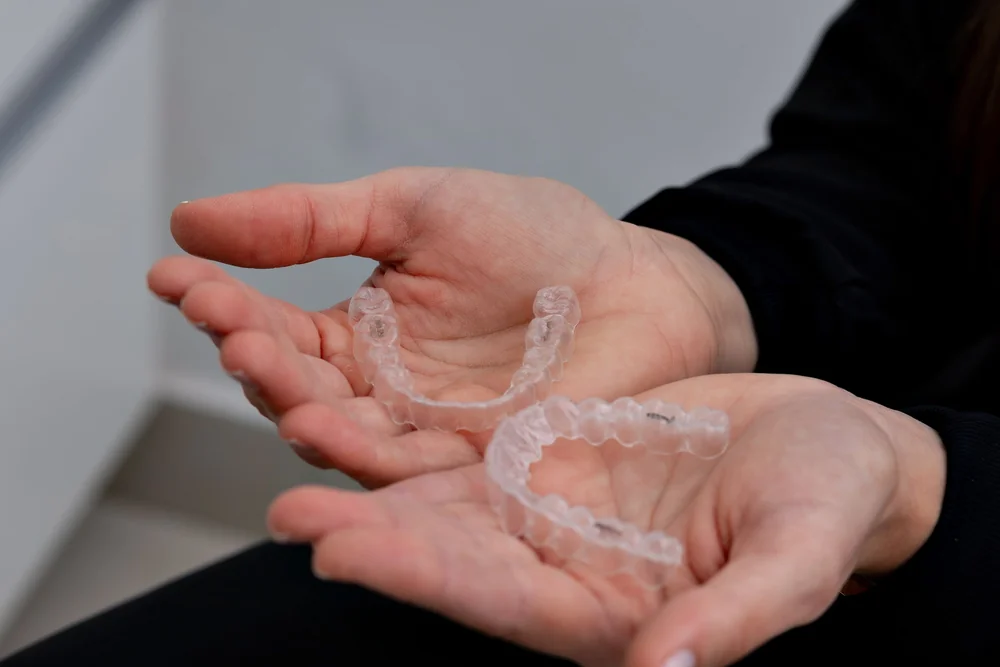
If you would like to straighten your smile but keep postponing treatment because of how metal braces look, you are not alone. Clear aligner treatment, one of the notable options in modern orthodontics, aims to align the teeth gradually using a series of nearly invisible transparent trays. In this article, we look at how clear aligners work, how they differ from metal braces, which cases they may be considered for, and what the retention phase after treatment involves.
What Is Clear Aligner Treatment?
Clear aligner treatment is an orthodontic method that applies controlled, gentle forces to the teeth through a series of thin, transparent, medical-grade plastic trays custom-made to fit snugly over them. Often referred to as invisible braces, this approach uses removable trays instead of wires, brackets or fixed parts bonded to the teeth.
Each tray is designed to move the teeth from their previous position toward the target position in very small increments. As the trays are worn in sequence, the teeth approach the planned alignment step by step. The low visibility of the treatment is one of the main reasons it is often preferred by adult patients who spend much of their day in social or professional settings.
How Do Clear Aligners Work?
Digital Planning
The process starts with a three-dimensional digital impression taken with an intraoral scanner. On this digital model, the dentist plans the tooth movements step by step using dedicated software: which tooth will move, in what order, in which direction and by how much is determined in advance. A simulation of the projected final position of the teeth can be shared with you, so you have the opportunity to review the intended alignment before treatment begins.
Sequential Tray Series
Once the plan is approved, a series of trays is produced, each typically worn for one to two weeks. Depending on the scope of the case, the series may range from 15–20 trays to 50 or more. Each new tray carries the teeth to the next small step:
- Controlled force: The trays apply light, continuous pressure, producing slow, biologically compatible tooth movement within the bone.
- Attachments: When needed, small tooth-coloured composite bumps help the tray transfer force to the tooth more effectively.
- Regular changes: Trays are switched according to the schedule set by your dentist; skipping the sequence can leave the treatment behind plan.
How Do They Differ from Metal Braces?
In conventional metal braces treatment, force is delivered through brackets bonded to the teeth and the archwire running through them. If you are curious about how brackets work and what types exist, you can read our article on what brackets are and their types. The main differences between clear aligners and fixed treatment can be summarised as follows:
- Visibility: Clear aligners are rarely noticeable at conversational distance, whereas metal brackets are clearly visible in the smile.
- Removability: Trays are taken out while eating and brushing; brackets stay fixed in the mouth throughout treatment.
- Hygiene: Because the tray is removable, brushing and flossing continue in the usual way; fixed braces require interdental brushes and a longer cleaning routine.
- Diet: Fixed treatment calls for restrictions on hard and sticky foods, while aligner treatment involves very few dietary limitations since the tray is removed at mealtimes.
On the other hand, fixed braces work continuously under the dentist's control and depend far less on patient compliance. The choice between the two methods should therefore be made not only on aesthetic grounds but together with the clinical requirements of the individual case.
The 20–22 Hours a Day Wear Routine
One of the most critical factors in the success of aligner treatment is patient compliance. The trays should stay in the mouth for roughly 20–22 hours a day and be removed only for meals, hot drinks and oral hygiene. When wear time regularly falls below this target, the teeth do not move at the planned pace, the trays begin to fit poorly and the overall treatment time may be extended.
- Always store the tray in its protective case when it is out of your mouth; trays wrapped in napkins are the ones most often lost.
- Avoid drinks other than water while wearing the tray; sugary and acidic drinks can pool under the tray and increase the risk of decay.
- Brushing your teeth before reinserting the tray matters both for hygiene and for the life of the tray.
Who Is a Suitable Candidate?
Clear aligners are not the first option for every orthodontic problem; suitability is determined through a clinical examination and radiographic assessment.
Cases where clear aligners may be considered
- Mild to moderate crowding
- Gaps between the teeth (diastema)
- Mild rotations and tilting
- Patients who had orthodontic treatment in the past but experienced relapse after neglecting the retention phase
Cases where fixed treatment may take priority
- Advanced skeletal discrepancies and bite problems
- Cases requiring large tooth movements or severe rotations
- Plans involving tooth extraction and extensive root movement
- Patients unlikely to maintain the 20–22 hour daily wear routine
In such situations, your dentist may recommend fixed braces or hybrid plans in which the two methods are used in sequence.
How Does the Treatment Process Proceed?
A typical clear aligner treatment consists of the following stages:
- Examination and assessment: The scope of the orthodontic problem is defined through clinical examination, X-rays and photographs.
- Digital impression and planning: A three-dimensional scan is taken, and the target alignment is planned in software and shared with you.
- Delivery of the trays: The first trays are handed over, and usage, cleaning and the change schedule are explained in detail.
- Review appointments: Progress is monitored at check-ups usually held every 6–10 weeks, and the plan is updated when needed.
- Finishing and refinement: Where necessary, minor corrections are made with additional tray series.
Why Does the Retention (Retainer) Phase Matter?
Regardless of the method used to align them, teeth tend to drift back toward their old positions over time. For this reason, a retention phase begins as soon as active treatment ends. Your dentist may recommend a fixed retainer (a thin wire bonded behind the teeth) or removable retainers; removable retainers look similar to the treatment trays and are mostly worn at night. If you would like to learn about the different types of appliances worn at night, you can read our article on what a night guard is. When the retention phase is neglected, crowding can develop again and part of the achieved alignment may be lost.
For patients whose aesthetic expectations continue after alignment, a comprehensive Hollywood Smile plan covering treatments such as whitening or laminate veneers can also be considered.
The information in this article is intended for general informational purposes; a clinical examination is required for an individual diagnosis and treatment plan.
Frequently Asked Questions
How long does clear aligner treatment take?
The duration depends on the degree of crowding, the planned tooth movements and how consistently the trays are worn. Mild cases may be completed in 6–8 months, while comprehensive cases can take up to 18 months. A realistic timeframe can only be estimated after the examination and digital planning.
Do the trays affect speech?
A slight difference in some sounds may be noticed during the first few days; the tongue adapts quickly, and for most patients speech returns to its usual flow within days.
Can you eat while wearing clear aligners?
No; the tray should be removed before meals and before any drink other than water. After eating, the teeth are brushed and the tray is reinserted. This habit prevents both deformation of the tray and food accumulating underneath it.